Discovering Ancient Egypt at Rijksmuseum van Oudheden


Painted mummy sleeve of Panesy
Third Intermediate Period, c. 950-750 BC.
Thebes (Luxor), Egypt
Painted cartonnage (linen with plaster layer), gold leaf, wood
Purchase 1826
Inventory number: L.XII.3-c
Collection: Rijksmuseum van Oudheden
Photo © Rijksmuseum van Oudheden


Discovering Ancient Egypt

Until March 15, 2026


Discovering Ancient Egypt has returned to the Netherlands! Previously shown in twelve cities in Japan, South Korea and Australia, this touring exhibition has attracted more than 1.5 million visitors since 2020. Five years on, the exhibition is returning to the Netherlands and can be seen in Leiden until March 2026.

Coffins, statues and golden jewellery

Running like a thread through the exhibition story is the timeless fascination with ancient Egypt and the constant flow of new discoveries and research. The exhibition features almost five hundred objects, including a considerable number of coffins, impressive statues, gold jewellery, colourful papyri, animal mummies and unique manuscripts.

Burial gifts reunited

Discovering Ancient Egypt tells the dazzling story of the life, religion and culture of the ancient Egyptians. Many of the objects are from the museum’s own collection and have travelled around the world: for years, they could only be seen in well-attended exhibitions in Asia and Australia. Highlights include the golden burial gifts from the tomb of General Djehuti. After they were discovered, they were scattered across several European museums. But now, for the first time in two hundred years, the objects from the collections of the Musée du Louvre and the National Museum of Antiquities have been reunited.

Wonder through the ages

Thousands of years ago, the Egyptians already viewed the culture of their predecessors with reverence and wonder. Centuries later, Arab scholars from the Middle East showed a great interest, followed by adventurers and collectors in the nineteenth century. That is why you can see one of the oldest maps of Egypt in the exhibition, as well as extremely rare Arabic manuscripts and early Islamic hieroglyphic studies. The garments, drawings and watercolours of nineteenth-century travellers such as Alexine Tinne and Willem de Famars Testas offer a personal perspective on the appeal of ancient Egypt for Europeans.

Private lives and animal mummies

Discovering Ancient Egypt then turns to the ancient Egyptians themselves. Objects from their private lives shed light on their surroundings and ideas, daily lives and beliefs. They include amulets, luxurious jewellery, musical instruments, woven reed sandals, and a box of games with a formula that wishes its owner good luck. There is also a special collection of animal mummies. X-rays and CT scans were used to study them down to the last detail, sometimes with remarkable discoveries: a large crocodile mummy turned out to contain not one, but two young crocodiles, packed together with dozens of baby crocodiles.

The underworld and restored coffins

The last part of the exhibition is about the afterlife in Egypt. An impressive display features different painted coffins, including a complete set of four matching coffins. There are all of the ‘necessities’ for the deceased, such as memorial statues, sheets of papyrus with magical spells and amulets. Some of these coffins were recently restored. The restoration was preceded by scientific research and infrared and UV photography; this revealed how they had been made thousands of years ago, and which pigments were used at the time to create the vibrant colours.

 
Learn more


Exhibition Preview


Book of Death
21st Dynasty, 1075–950 BC.
Egypt
Papyrus
Gift 1861
Inventory number: RA 58, sheet 1
Collection: Rijksmuseum van Oudheden
Photo © Rijksmuseum van Oudheden

Sky Goddess on Wooden Coffin of Hatytemhat
Late Period, c. 725-325 BC.
probably from Sakkara or El-Hibeh, Egypt
Wood
Inventory number: AMM 7-a
Purchase 1829
Collection: Rijksmuseum van Oudheden
Photo © Rijksmuseum van Oudheden

Necklace with scarab
Egypt
Gold, green jasper
Inventory number: AO 1a
Collection: Rijksmuseum van Oudheden
Photo © Rijksmuseum van Oudheden

Papyrus Research: Color be-Qenna Project The Color be-Qenna project focuses on the pigments on the 'Book of the Dead papyrus' of Qenna, which is more than 3000 years old.
Photo © Rijksmuseum van Oudheden

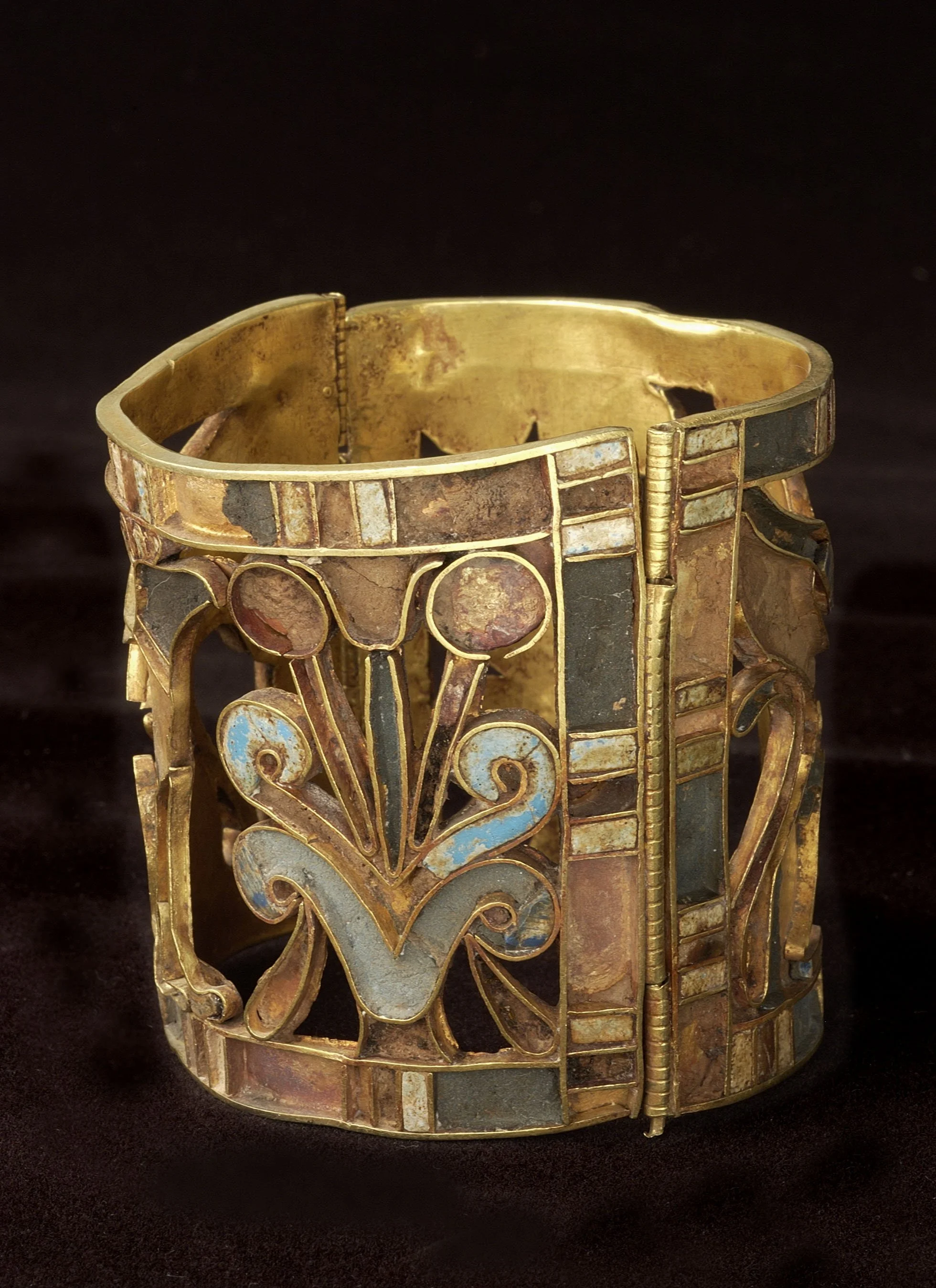
Bracelet
Egypt
Gold, cloisonnée marquetry
Inventory number: N 1958
Collection: Paris, Musée du Louvre
Photo © Musée du Louvre, Dist. GrandPalaisRmn/Christian Décamps
Bracelet
Egypt
Gold, cloisonnée marquetry
Inventory number: N 1958
Collection: Paris, Musée du Louvre
Photo © Musée du Louvre, Dist. GrandPalaisRmn/Christian Décamps

Papyrus Research: Color be-Qenna Project The Color be-Qenna project focuses on the pigments on the 'Book of the Dead papyrus' of Qenna, which is more than 3000 years old.
Photo © Rijksmuseum van Oudheden

Engraving Giza
1681
Paper
Inventory number: Z 2012/8.1
Collection: Rijksmuseum van Oudheden
Photo © Rijksmuseum van Oudheden

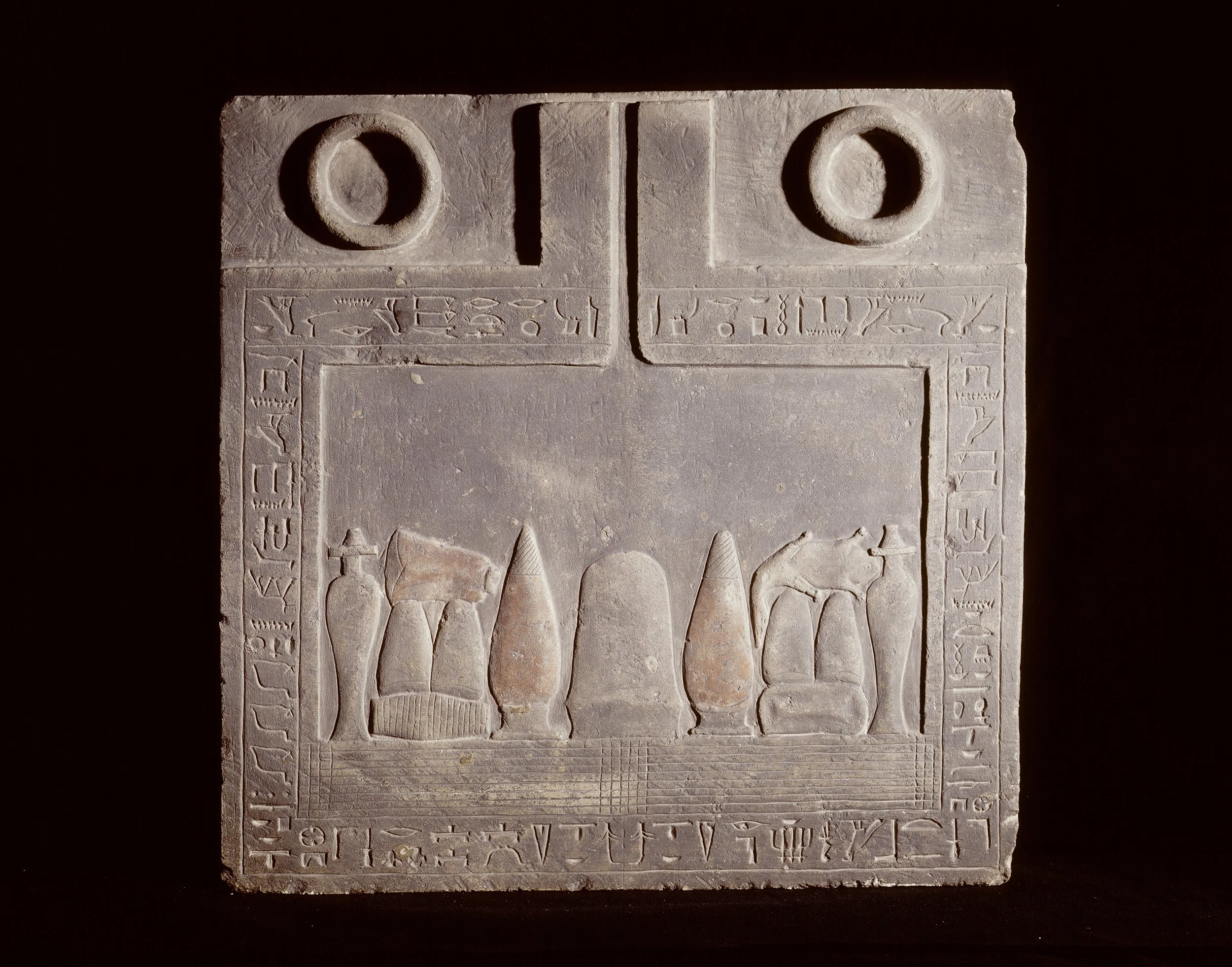
Offering Table
Middle Kingdom, 1980–1760 BC.
Abydos, Egypt
Limestone
Purchase 1829
Inventory number: AM 12-c
Collection: Rijksmuseum van Oudheden
Photo © Rijksmuseum van Oudheden

Necklace with three fishes
Gold
Inventory number: N 1851
Collection: Paris, Musée du Louvre
Photo © Musée du Louvre, Dist. GrandPalaisRmn/Maurice et Pierre Chuzeville

Chains
New Kingdom (1550-1075 BC)
Egypt
Glass, faience, various types of stone, gold
Purchases 1829
Inventory number: AO 5c, AO 4b and AO 3c
Collection: Rijksmuseum van Oudheden
Photo © Rijksmuseum van Oudheden

Fish mummy
Greco-Roman Period, 500 BC-300 AD.
Egypt
Painted wood; mummified fish in linen windings
Purchase 1827
Inventory number: CI 259
Collection: Rijksmuseum van Oudheden
Photo © Rijksmuseum van Oudheden

Falcon’s Head
Egypt
Gold
Inventory number: AO 1g
Collection: Rijksmuseum van Oudheden
Photo © Rijksmuseum van Oudheden

Jewelry of Collar
Gold with glass inlay
Inventory number: AO 1b
Collection: Rijksmuseum van Oudheden
Photo © Rijksmuseum van Oudheden

Painted mummy sleeve of Panesy
Third Intermediate Period, c. 950-750 BC.
Thebes (Luxor), Egypt
Painted cartonnage (linen with plaster layer), gold leaf, wood
Purchase 1826
Inventory number: L.XII.3-c
Collection: Rijksmuseum van Oudheden
Photo © Rijksmuseum van Oudheden

Bowl with fish and plant motifs
Egypt
Gold
Inventory number: N 713
Collection: Paris, Musée du Louvre
Photo © Musée du Louvre, Dist. GrandPalaisRmn/Hervé Lewandowski

Jewelry of Collar
Gold with glass inlay
Inventory number: AO 1b
Collection: Rijksmuseum van Oudheden
Photo © Rijksmuseum van Oudheden

Eye of Horus Amulet
New Kingdom - Third Intermediate Period (c. 1550-700 BC)
Egypt
Faience
Acquired between 1818 and 1840
Inventory number: EC-ZM2881
Collection: Rijksmuseum van Oudheden
Photo © Rijksmuseum van Oudheden

Ity's coffin examined
Late Period, 25th-26th Dynasty, ca. 725-525 BC
Thebes, Egypt
Wood and cartonnage
Purchased 1828
Inventory number: H.III.VVV App.-1
Collection: Rijksmuseum van Oudheden
Photo © Paolo Triolo

Drinking Cup
New Kingdom, 1550-1075 BC.
Egypt
Faience
Purchase 1829
Inventory number: AD 15a
Collection: Rijksmuseum van Oudheden
Photo © Rijksmuseum van Oudheden

Game Box
New Kingdom 1550-1200 BC.
Egypt
Wood
Purchase 1829
Inventory number: AH 34a
Collection: Rijksmuseum van Oudheden
Photo © Rijksmuseum van Oudheden

Foot Sleeve
Sakkara, Egypt
Greco-Roman Period, 300 BC-400 AD.
Painted cartonnage (linen with plaster layer), gold leaf, wood
Purchase 1968
Inventory number: F 1968/3.2
Collection: Rijksmuseum van Oudheden
Photo © Rijksmuseum van Oudheden

Ship Model
Saétic Period 725-350 BC.
Egypt
Bronze
Gift 1874
Inventory number: AED 87
Collection: Rijksmuseum van Oudheden
Photo © Rijksmuseum van Oudheden

Slippers
New Kingdom 1550-1075 BC.
Egypt
Braided palm leaf
Purchase 1829
Inventory number: AU 7
Collection: Rijksmuseum van Oudheden
Photo © Rijksmuseum van Oudheden


The exhibition rooms of Discovering Ancient Egypt
Photo: Mike Bink


The exhibition rooms of Discovering Ancient Egypt
Photo: Mike Bink