
Arctic and Northwest Coast Arts in Suomen Kansallismuseo
Arctic and Pacific Northwest Coast Arts in Suomen Kansallismuseo
Curated by Steven G. Alpert
This month, Art of the Ancestors presents a fine selection of Arctic, Alaskan, and Northwest Coast cultural items from The National Museum of Finland (Suomen Kansallismuseo). This venerable museum houses more than 40,000 ethnographic objects.
When one thinks of the cultural arts from these areas, the first European institutions that might immediately come to mind are the Kunstkamera in St. Petersburg, Russia, the Museo de América in Madrid, or the British Museum. However, the National Museum of Finland's holdings in these areas, while more modest, are also filled with rewarding surprises that should impress and further enlighten both the curious and longtime connoisseurs.
Some of the Museum's earliest ethnographic material was collected from diverse Arctic and Northwest Coast peoples. Many of these works were acquired during the first half of the 19th century. Some are gems and true miracles of survival. In particular, the material obtained by Finns, especially the Helsinki-born explorer and administrator A. A. Etholén, provided "invaluable sources of information about the history of northern peoples." His early career there (1818-1825) expanded when he returned a year later, and he eventually became the General Manager of the Russian-American Company (1840-1845). In that position, he was able to hire and promote other Finns under the Russian Imperial banner. Sadly, much of his first collection perished in a fire in 1827. However, Etholén, as an ardent collector and ethnographer, still amassed more than 300 items that continue to be housed in The National Museum for posterity.
Personally, I have always been attracted by headgear: ceremonial constructions or the hats worn by elites, warriors, and traditional hunters. In many cases, what covers our heads says a lot about who we are and what we are trying to project and accomplish. Of particular note among the National Museum of Finland's holdings are iconically decorated, elongated, bentwood peaked hats. These were worn by the Aleuts (Unangax̂ or Alutiiq), while those that resemble what we would call a visor shape were mostly crafted on the Alaskan mainland. There is also an illustrated visor decorated with large ears with dotted designs, and frontally centered by a pair of walrus heads flanked by elongated seagull beaks en profile, all crafted from marine ivory in a style that is probably Yup'ik. An additional illustrated decoy helmet is fashioned from a solid piece of wood in the form of a seal's head. It was once deeply oiled to glisten like sealskin in the sunlight. This helmet was collected in 1833 and is most likely Koniag, from the Kodiak archipelago or the Alaska Peninsula.
A sea hunter's headgear helped protect him against the elements and excessive sea spray and blocked the sun's glare. They were also said to disguise a human's face, to camouflage him, and to turn a skillful hunter into a mystical being capable of calmly communicating with, beckoning, and attracting their prey. In their light, low-lying skin-covered ocean-going kayaks, northern groups hunted seals, sea lions, otters, and whales.
To create the aforementioned wooden Aleutian hats, driftwood or yellow cedar was steamed and boiled, and then thinly shaved before being set over a jig that served as a mold. The finished forms were then skillfully painted, adorned with walrus ivory plaques, charms or amulets, and European trade beads. An Aleutian hat's peak supported a suspended weight (so the hat wouldn't blow off). Often, the hat's apex was further beautified with cormorant feathers or bristling clusters of sea lion whiskers. Every small detail on these hats was purposeful and aesthetically balanced to reflect the wearer's social and marital status as well as his transformational powers and prowess as a hunter. Several of the bentwood hats housed in the National Museum of Finland are among the finest extant.
Examples of essential everyday items also deserve attention. For Inuit women, the cutting knife, or ulu, was a prized possession. This ingenious tool can be archaeologically traced back some 4,500 years. Used for slicing, scraping, or cutting (traditionally) with a well-honed slate blade, the ulu was something more than, say, the consummate Swiss Army knife. It was and still is the practical and symbolic counterpart and complement to a man's hunting abilities, as it reflects a woman's skillset and prowess; her aspirations and resourcefulness. As such, these were often handed down mother-to-daughter as treasured heirlooms. This particular cutting knife is beautifully stained and decorated with geometric designs and two killer whales. A woman's hooded parka (kamleika) with gusseted sleeves is also a visual marvel and as good as they get. Strips of natural and dyed reddish-brown gut and skin were overlaid and then stitched together with sinew to make this garment light, durable, strong, and long-lasting. A label for this parka was originally written by the famous Russian explorer and zoologist Ilia Wosnesenski (Voznesenski), who brought back many items to the St. Petersburg Academy of Sciences between 1839 and 1849. He refers to this parka as 'Aglegmiut,' a Yup'ik-speaking group that migrated in the mid-18th century to Alaska's Bristol Bay and frequently allied with early Russian traders.
Superb utilitarian items from Aleutian, Inuit, Yup'ik, and Northwest Coast peoples abound in the National Museum of Finland’s collection. These include distinctive bowls and storage boxes. Several featured items underscore the age-old interactions among different peoples. An unusual box collected in 1832 is structurally Alutiq (Koniag, Chugach, or Inuit) but is covered with Tlingit-inspired designs. Another unusual early item, collected in the same year and most likely from either Chugach or Koniag, is a red-and-black bowl depicting a black bear and inlaid with European trade beads. The museum's collection also possesses four masks from Etholén, all collected before 1845, that, while of a certain level of artistry, are not shamanic masks. Perhaps they belong to a category of ancestor masks, but as the pre-eminent art historian of this area, Bill Holm, noted, these masks were most likely carved by the same hand and probably created for sale.
Trade, exchange, and adaptation are typified by the historical dispersion of the so-called 'octopus' or shoulder bag. With their 'tentacles' or four legs, these bags conceptually evolved from animal-skin pouches in Eastern Canada. In the 18th and 19th centuries, they entered the far West through the fur trade, Métis, and other tribal contacts. This type of bag or pouch 'with many legs' became ubiquitous among the Tlingit, Subarctic, Salish, and interior Northwest Coast peoples. They often merge floral designs (via the Métis) with Northwest Coast crests. The example illustrated here is early, as it entered the museum in 1834. It combines red trade cloth, silk threads, trade beads, and two European pearl shell buttons set as if they were an octopus' or devil fish's 'eyes'.
No introduction would be complete without mentioning a few fiber art gems. The museum's best Chilkat blanket was collected before 1845. The development of these into the iconic form that we know today didn't really evolve until the early 1800s. They are a Tsimshian invention. Known in Tsimshian as a Gwis-halait or dancing blanket, they are based on mid-section aprons that combine with the contour of a traditional cedar bark cape, which in the 19th century became an important part of a high chief's emblematic raiment. Blankets were worn as high regalia, danced and displayed in mortuary settings. As items of wealth and prestige, Chilkat blankets were also used as a kind of aristocratic currency between diverse groups. As women married into other groups, they brought their weaving techniques and knowledge of dyes with them. To make what the Tlingit traditionally refer to as “the fringe around the body” (Naxxin) was a labor-intensive process. It involved finger-twining mountain goat wool with a warp of twisted yellow cedar and the use (on the oldest ones) of beautiful natural dyes.
The totemic clan designs on the central panel of this gorgeous blanket are said to presumably represent a bear and a dragonfly, with side panels that include ravens en profile. This blanket is listed in an old Russian catalog as a "nakidki' mantle of the Kolosh (Tlingit) Indians of Sitka (Alaska)". Museum notes indicate that Etholén held an annual affair during which gifts were exchanged with native chiefs. He may have received this blanket during one of those gift-exchanging ceremonies from a high-ranking Tlingit chief. Given this blanket's deep age and fine palette, which includes the distinctive and rare use of a pale olive green hue, it suggests that it was most likely made by the Tsimshian and then traded or exchanged with the Tlingit. (Roloff: 2026)
Another classic masterwork is the dazzling Coastal Salish blanket that entered the museum in 1828. Unlike Chilkat capes, these blankets are rare. Less than forty-five are said to have survived. (Gustafson: 1978) The National Museum of Finland's example is, to my eyes, the most beautiful one known. It probably dates to the very late 18th or early 19th century. In remarkable condition, the harmonious yet striking palette of colors (several of which were derived from non-native sources) is set in a woven combination of mountain goat and sheep's wool, and possibly woolly dog hair. The placement of checkerboards, zigzags, braids, and side-facing isosceles triangles set on a neutral ground gives this particular robe its highly sophisticated, eye-dazzling yet earthy appearance. These blankets were displayed and gifted at potlatch ceremonies and exchanged when titles, wealth, and status were being confirmed upon an individual.
The National Museum of Finland also stewards a number of beautiful spruce-root and red-cedar-bark basketry hats. My personal favorite among the museum's holdings is a particularly striking one. The hat's face, with its bared but clenched teeth and four double horizontal boneless protrusions that seem fluke-like, perhaps suggests that the animal being displayed is based on a killer whale. While from Alaska, this item appears to have been made north of Yakutat, the last Tlingit village. It is of Chugach or Koniag origin but influenced by and decorated in the fashion of hats from farther south. (Roloff: PC: 2026) The hat's crown is made of plain twining, but its brim features a raised weave of repeated interlocking diamond shapes. The painting of its subject matter in black and red is distinct. Lastly, this hat was further accentuated and finished off with three concentric circles of black trade beads sewn on and pierced dentalia shells.
At this writing, the main building of the National Museum in Helsinki, which houses this material, remains closed for renovation and a planned underground expansion. Budget cuts have reportedly indefinitely postponed its reopening, which was originally projected for 2027. Simply put, Finland is an amazing destination. It is hoped that items of the ilk of those illustrated here from the Suomen Kansallismuseo's collection will soon be shown again. These items are a pleasure to behold and an invitation to further explore the art, culture, and genius of northern peoples.
— Steven G. Alpert, founder of Art of the Ancestors
1
Bentwood Hat
Made before 1845
Alaska
Aleuts
Wood, walrus ivory, sinew, caribou hair, yarn, paint, twine, feathers
VK210:
2
Bentwood Hat
Made before 1834
Alaska, Norton Sound
Spruce, paint, walrus ivory, pigment, glass beads duck feathers, seashore grass
VK208:
3
Ritual Hat
Made before 1845
Alaska, Kodiak Island
Seal skin, seal fur, paint, sea lion esophagus membrane strips, caribou hair, yarn, silk, puffin beaks, cloth
VK213:
4
Seal Hunter’s Decoy Helmet
Made before 1833
Alaska, Kodiak Island
Koniag
Wood, paint
VK46:
5
Bentwood Hat
Made before 1845
Alaska
Aleuts
Spruce root, walrus ivory, beads, sinew, caribou hair, yarn, feathers, sea lion whiskers
VK207:
6
Caribou Carving
Made before 1845
Alaska, Katmai
Alutiiq, Sugpiaq
Walrus ivory, paint, pigment, beads
VK164b:
7
Mammoth Ivory Box
Made before 1845
Alaska, Pribilof Islands
Mammoth ivory, seal hair
VK333:
8
Woman’s Knife | Ulu
Made before 1834
Alaska
Slate blade, wood
VK107:
9
Hooded Gut Skin Parka
Made before 1845
Alaska, Bering Strait
Aglegmiut
Gut skin, sea lion esophagus membrane, feathers, dye, yarn, fish skin
VK274:
10
Grease Dish featuring Black Bear
Made before 1832
Alaska
Alutiiq
Wood, pigments, trade beads
VK68:
11
Bentwood Box
Made before 1832
Alaska, Prince William Sound
Wood, pigments
VK65:
12
Octopus Bag
Made before 1834
Alaska, Sitka?
Athabascan or Dené
Broadcloth, silk yarn, wool tassels, trade beads
VK335:
13
Salish Nobility Blanket
Made before 1828
Northwest Coast
Coast Salish
Yarn, mountain goat wool, animal fibers (possibly sheep or wooly dog), vegetal dyes
VK1:
14
Chilkat Blanket
Made before 1845
Alaska
Chilkat
Mountain goat wool, yellow cedar bark fiber, leather, dyes
VK44:
15
Zoomorphic D-adze
19th century
Vancouver Island, British Columbia
Nuu-Chah-Nulth
Wood, iron, leather, paint
Originally in the collection of Bernard L. Spence
VK5424:107
16
End of Bentwood Bowl
Late 19th century
Alaska, Admiralty Island
Red cedar
VK5424:103
17
Pipe Bowl with Bear Figure
Made after 1850
Alaska
Tlingit
Wood, abalone inlay, pigment, copper or brass cylinder, metal
VK5424:109
18
Grease Dish in the Shape of a Seal
Late 19th century
Alaska, Queen Charlotte Islands
Haida
Wood
Originally from the Museum of the American Indian, Heye Foundation Collections.
VK5424:105
19
Mask
Made before 1845
Alaska
Tlingit
Wood, pigments
VK50:
20
Labret Mask
Made before 1845
Alaska
Tlingit
Wood, pigments
VK49:
21
Mask
19th century
Nass Valley, British Columbia
Nisga’a
Wood, pigments
Originally from the Museum of the American Indian, Heye Foundation Collections.
VK5424:98
22
Shaman’s Necklace
19th century
Queen Charlotte Strait, Vancouver Island
Tlingit?
Bentwood armature, hide, whale bone pendants
VK5424:102
23
Basketry Hat
Made before 1852
Alaska, Prince William Sound?
Alutiiq, Sugpiaq
Spruce root, paint, beads, dentalia shells
VK5987:81
24
Basketry Hat
Made before 1852
Alaska, Prince William Sound?
Alutiiq, Sugpiaq
Spruce root, paint, beads, dentalia shells
VK5987:82
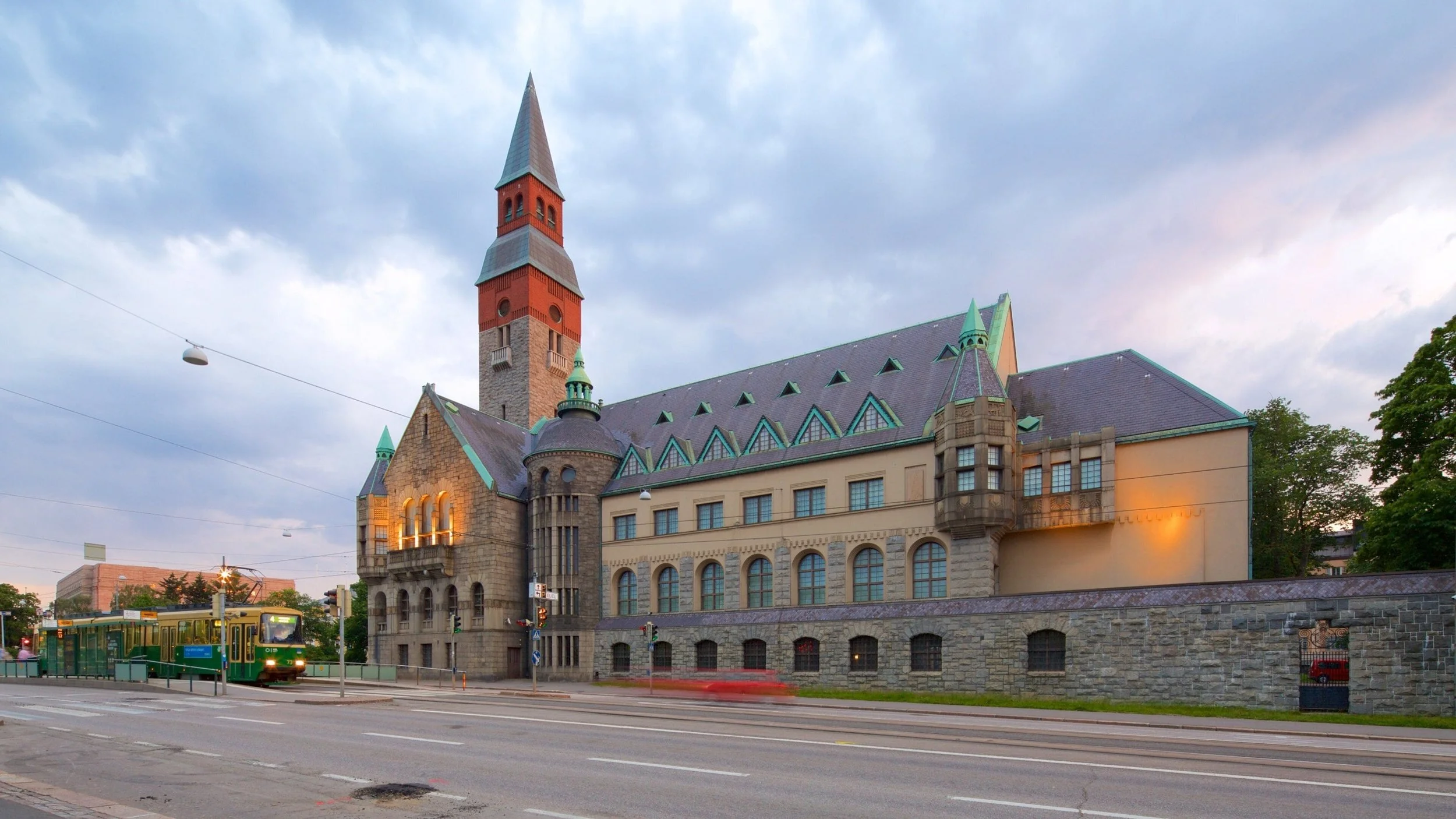
All artworks and images presented in this feature are the property of Suomen Kansallismuseo.
© Suomen Kansallismuseo