The Etruscans: From the Heart of Ancient Italy at the Legion of Honor


Etruscan, Votive statuette of Hercle, 320‒280 B.C. Bronze. 9 9/16 x 2 3/4 x 3 7/16 in. (24.3 x 7 x 8.7 cm). Courtesy of the J. Paul Getty Museum, Los Angeles, 96.AB.36


The Etruscans

From the Heart of Ancient Italy

May 2, 2026 — September 20, 2026


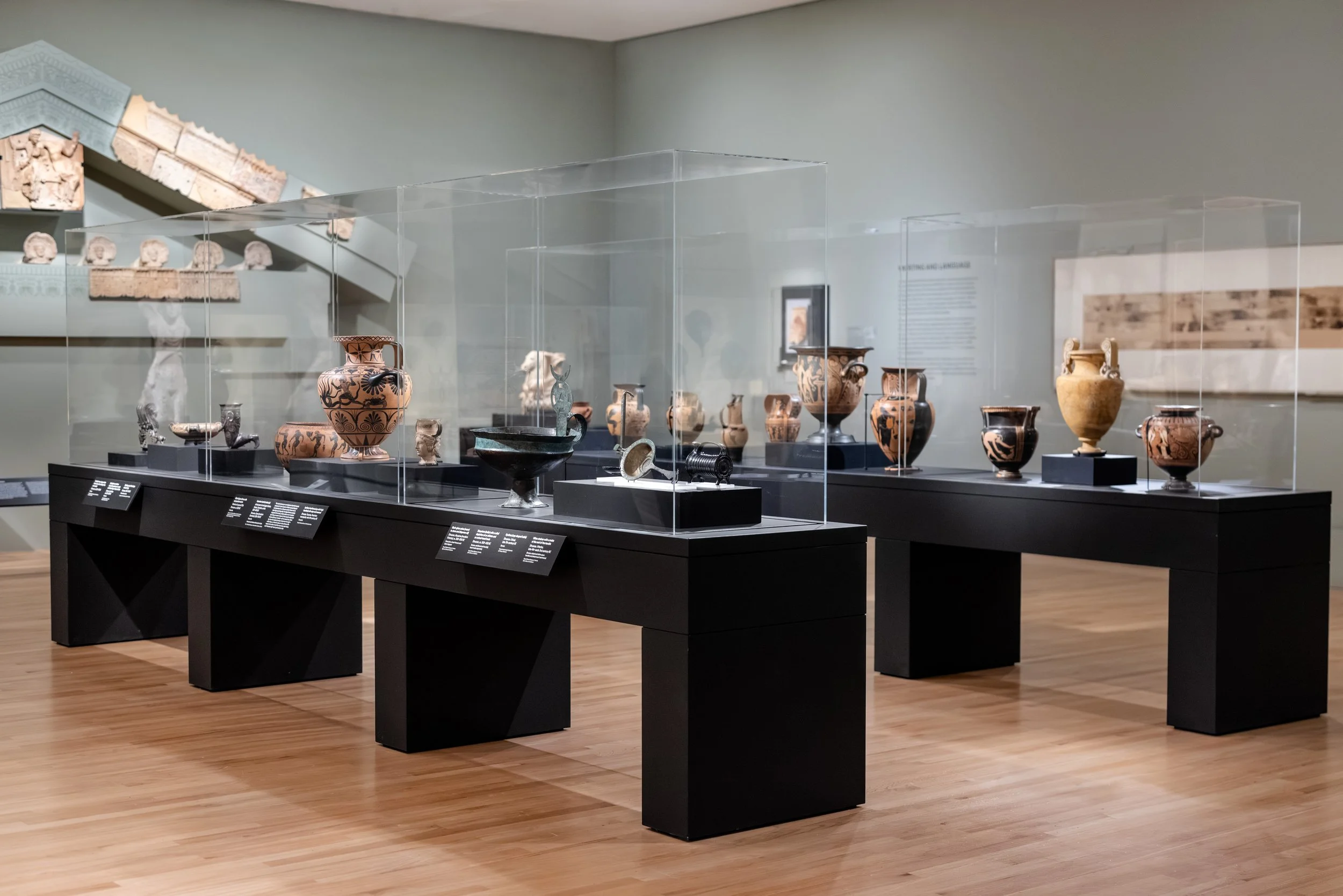
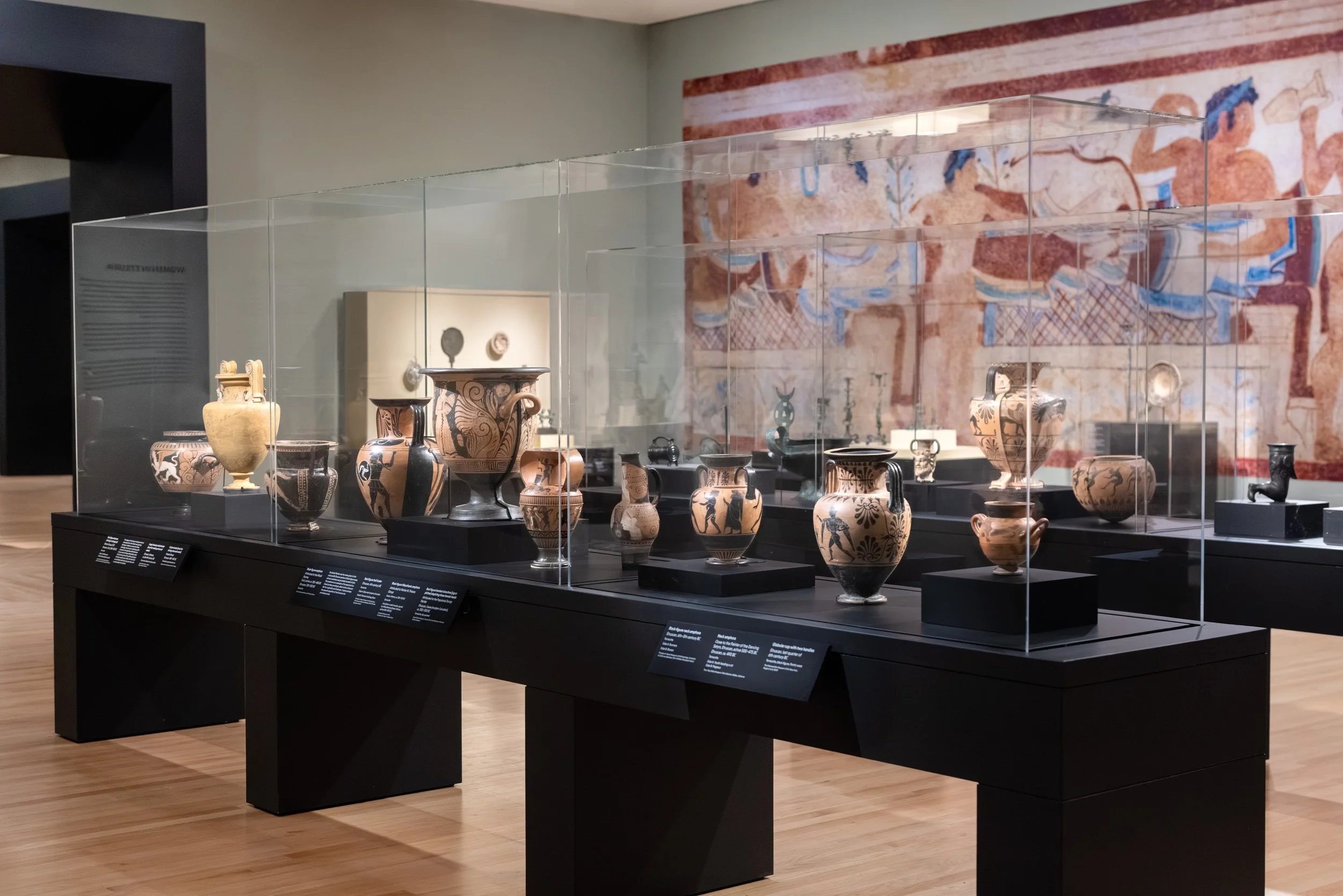
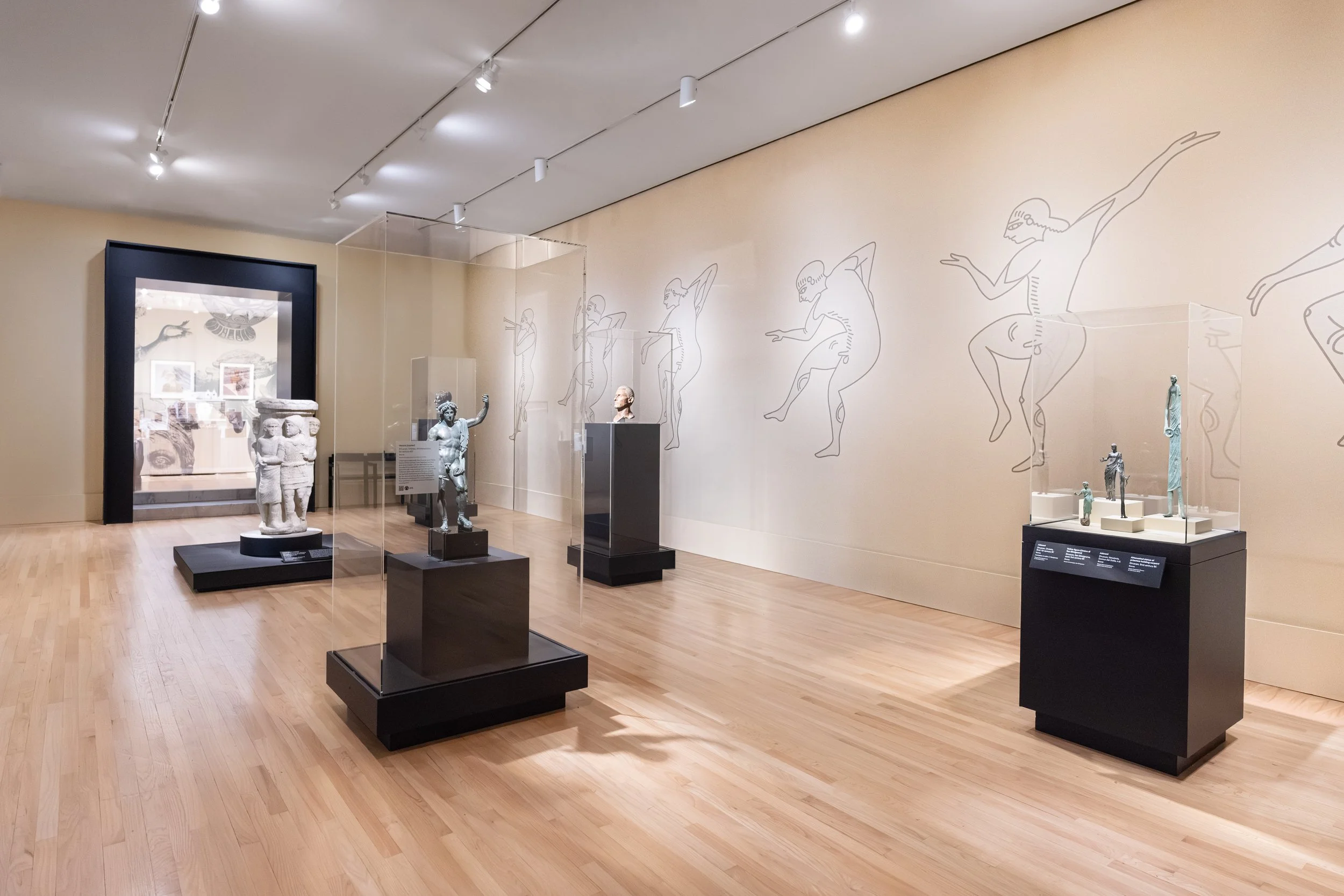
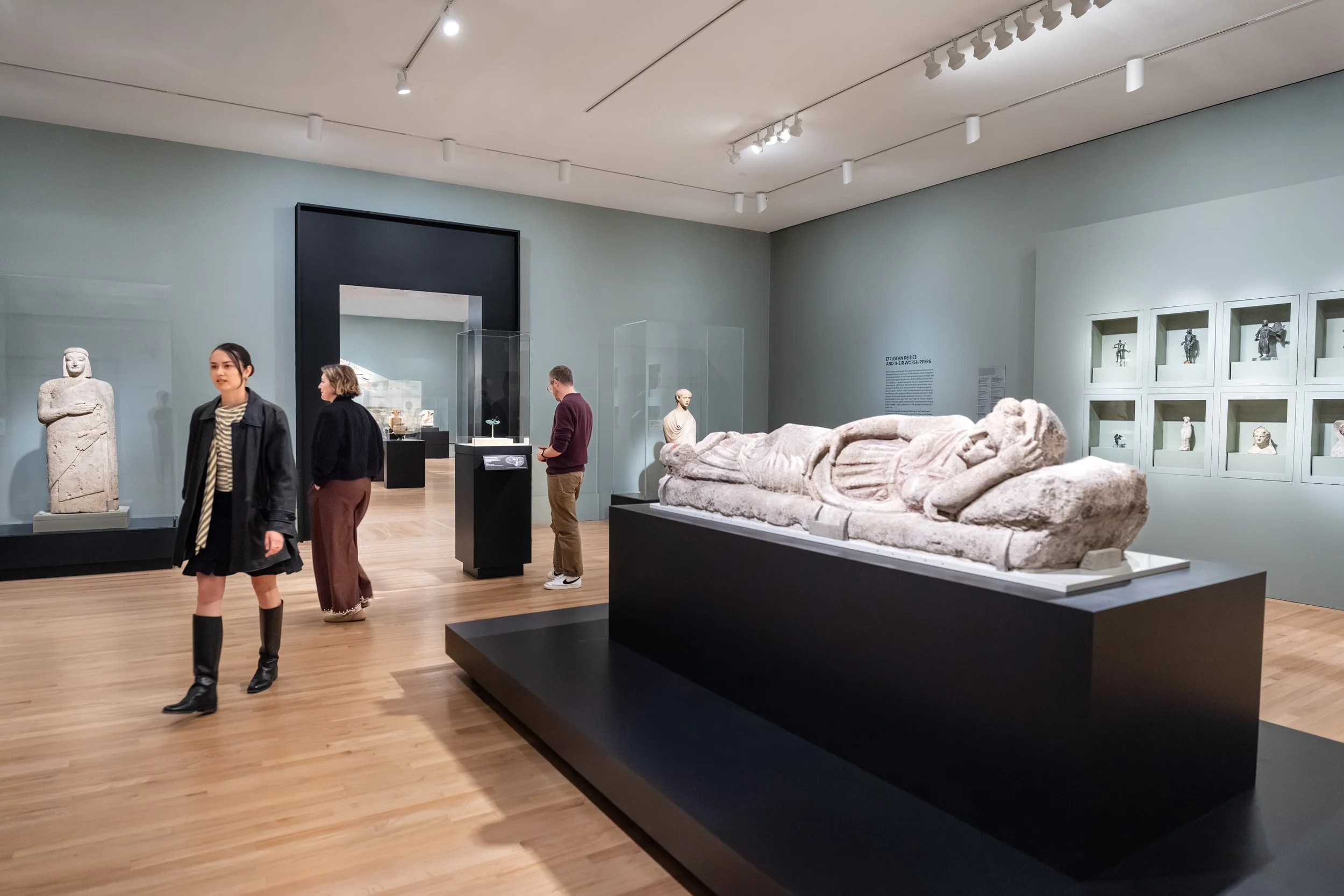
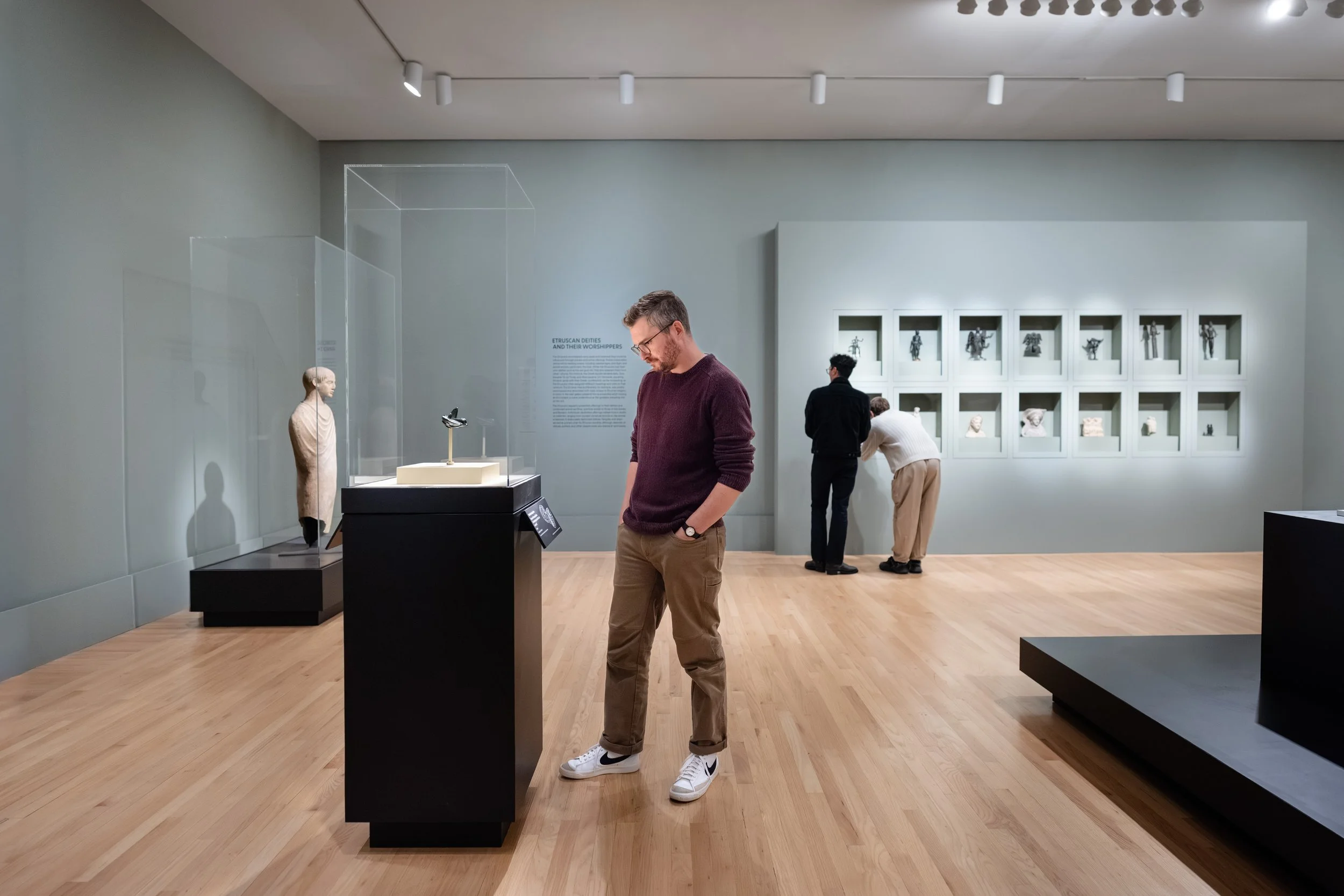
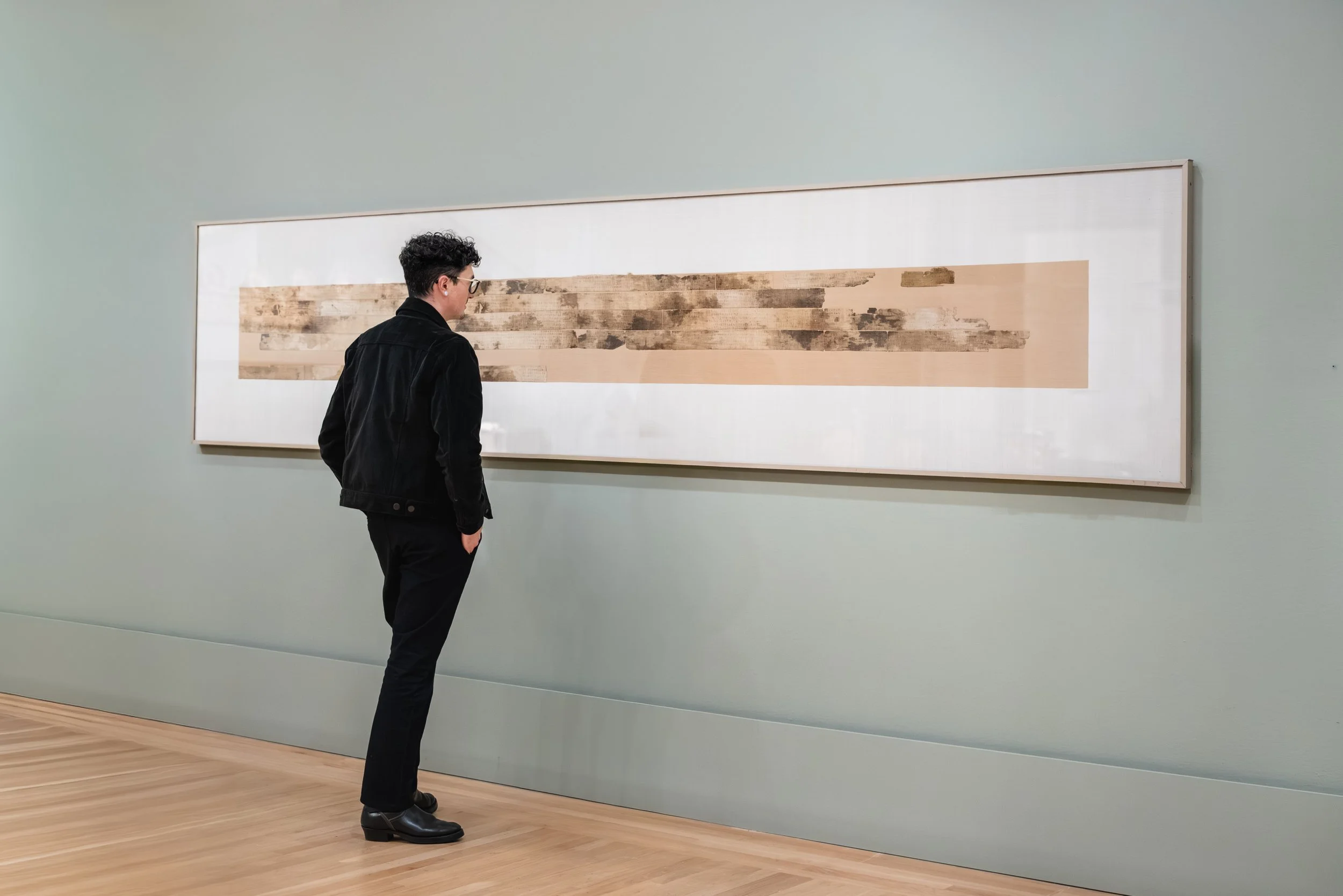
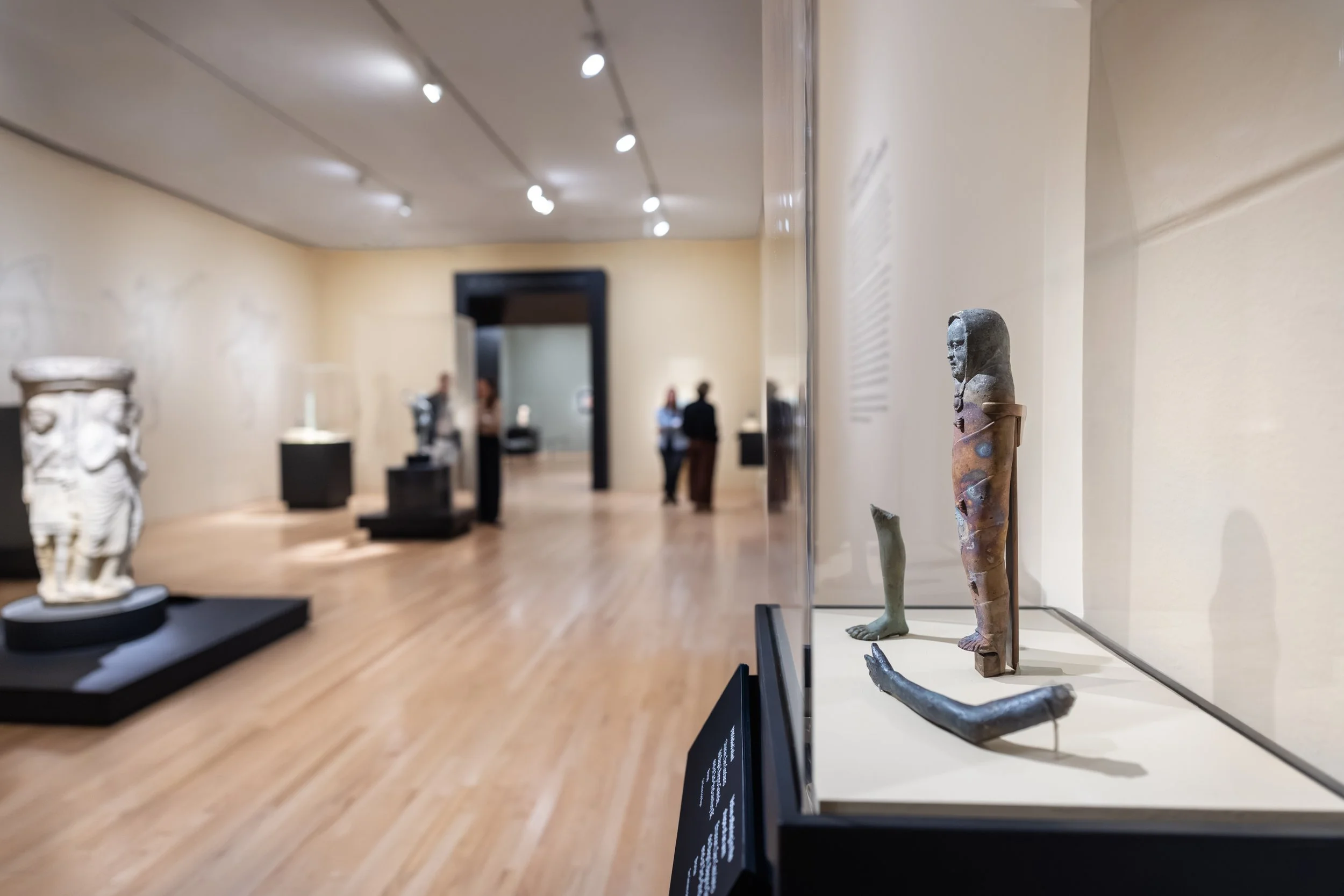
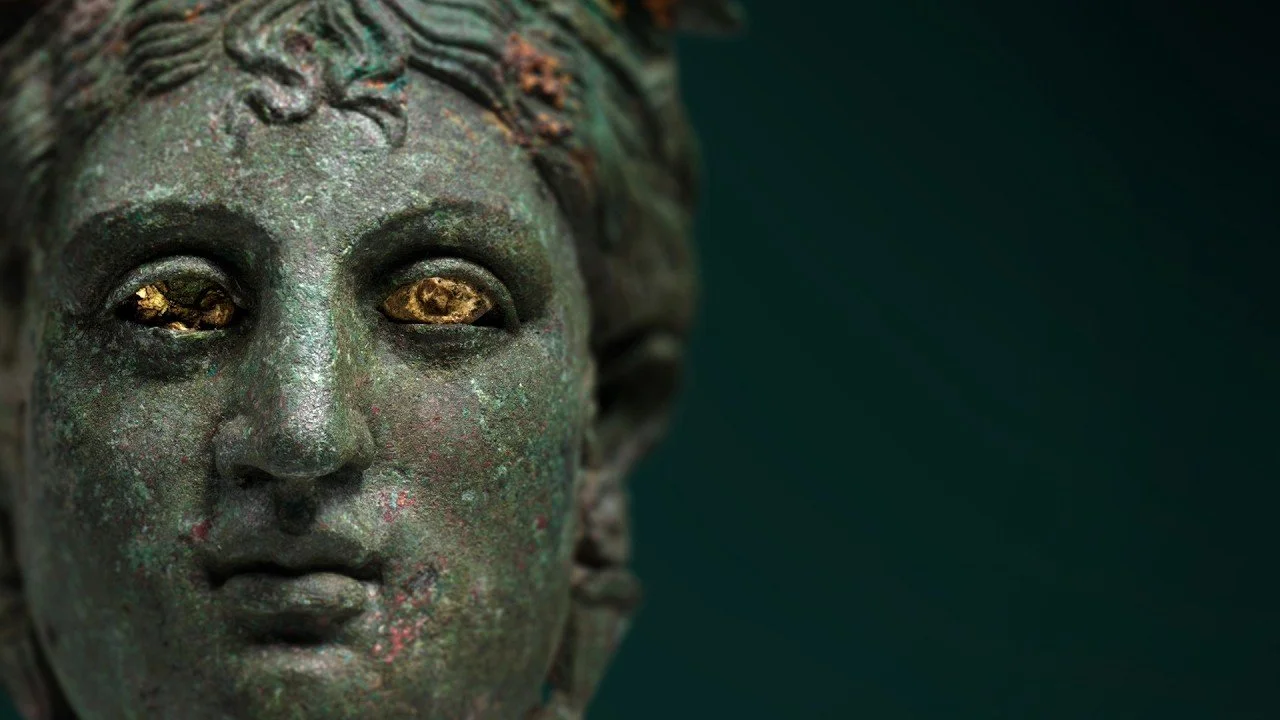
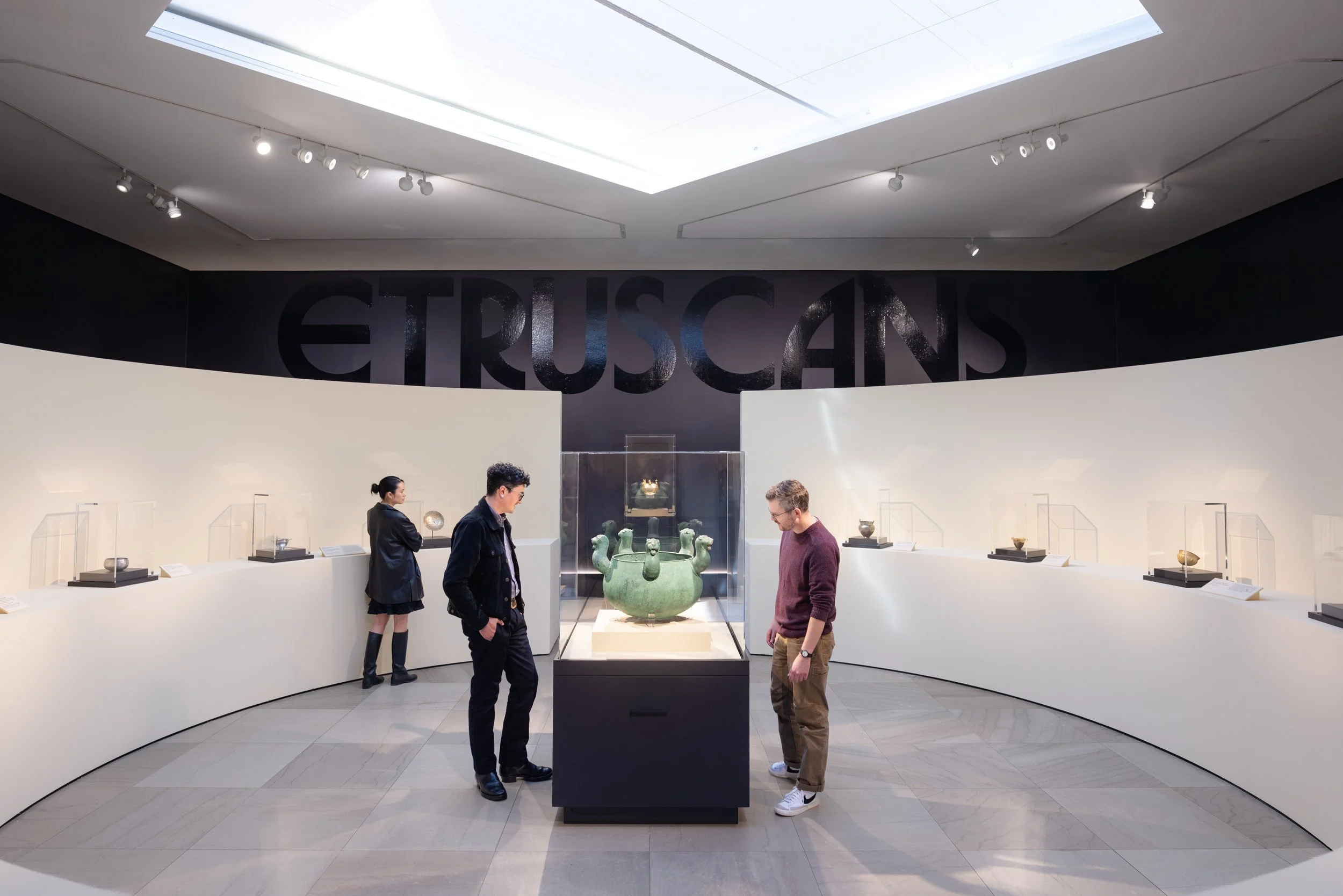
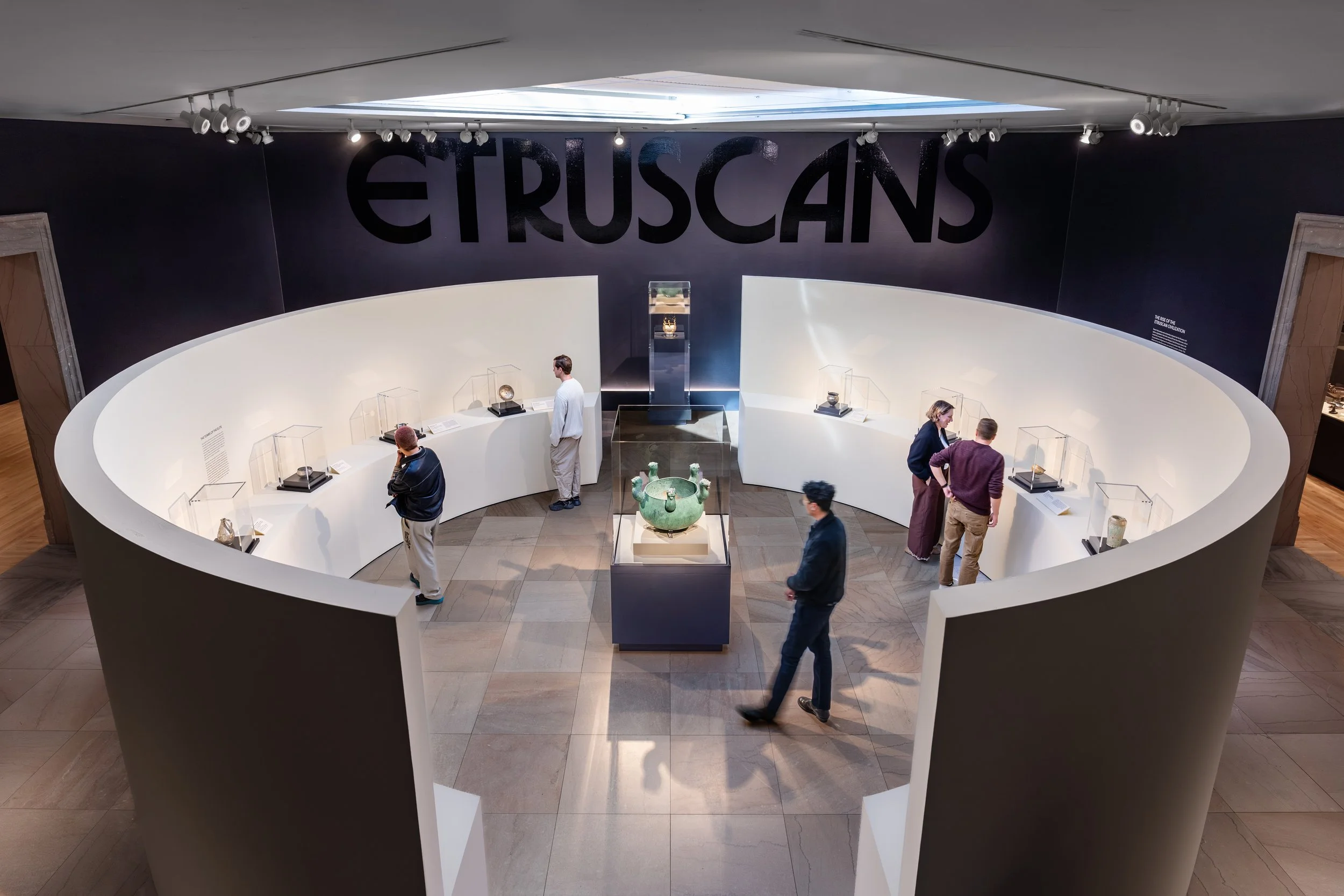
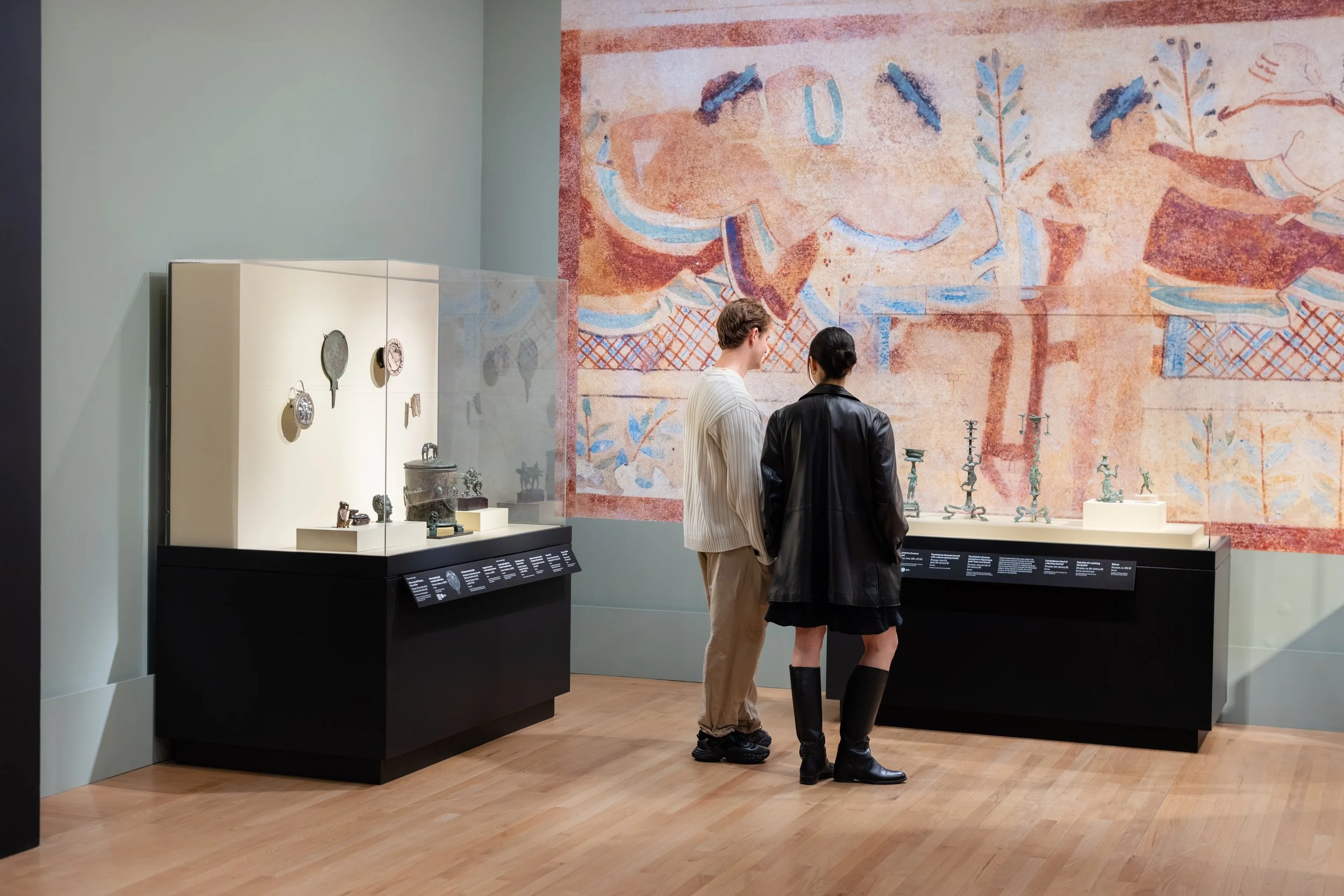
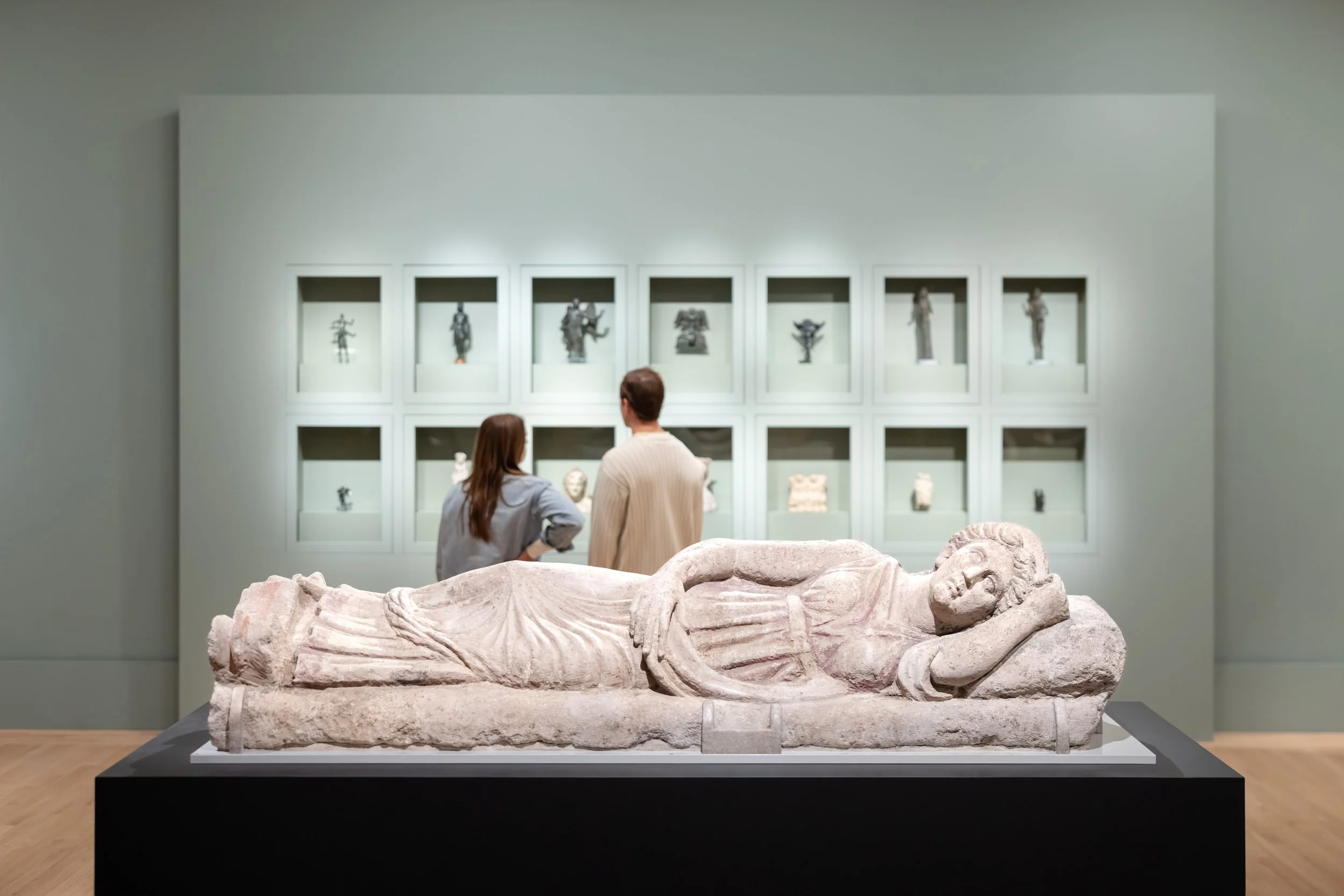
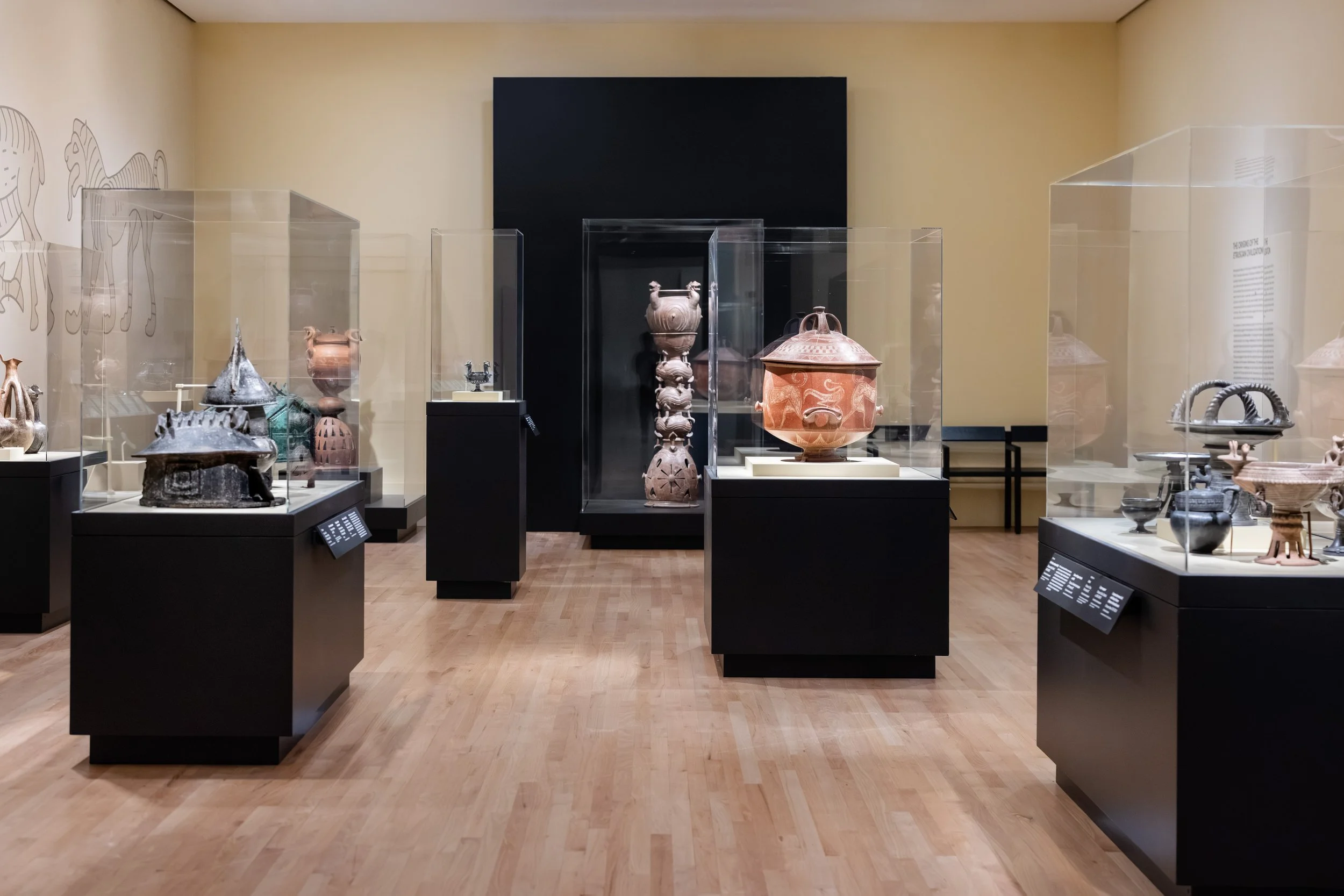
Togas, temples, hydraulic engineering, winemaking, and even “Roman” numerals, all widely credited to the Romans, were actually Etruscan innovations. The Etruscans thrived in what is now Italy for almost a millennium, from around 900 to 100 BC, before the rise of the Roman Empire. They laid the foundation for present-day architecture, engineering, and artistic achievements. Yet their culture remains overshadowed by ancient Greece and Rome. Drawing on the latest archaeological discoveries and cutting-edge scholarship, this is the most comprehensive exhibition on Etruscan culture in the United States to date. Over 150 exquisitely crafted and well-preserved examples of bronze and terracotta sculpture, gold jewelry, ceramics, and architectural features, as well as the longest-surviving piece of Etruscan writing, reveal a legacy that continues to captivate today.


Click below to watch The Etruscans, the Ancient World’s Greatest Untold Story.


Exhibition Preview
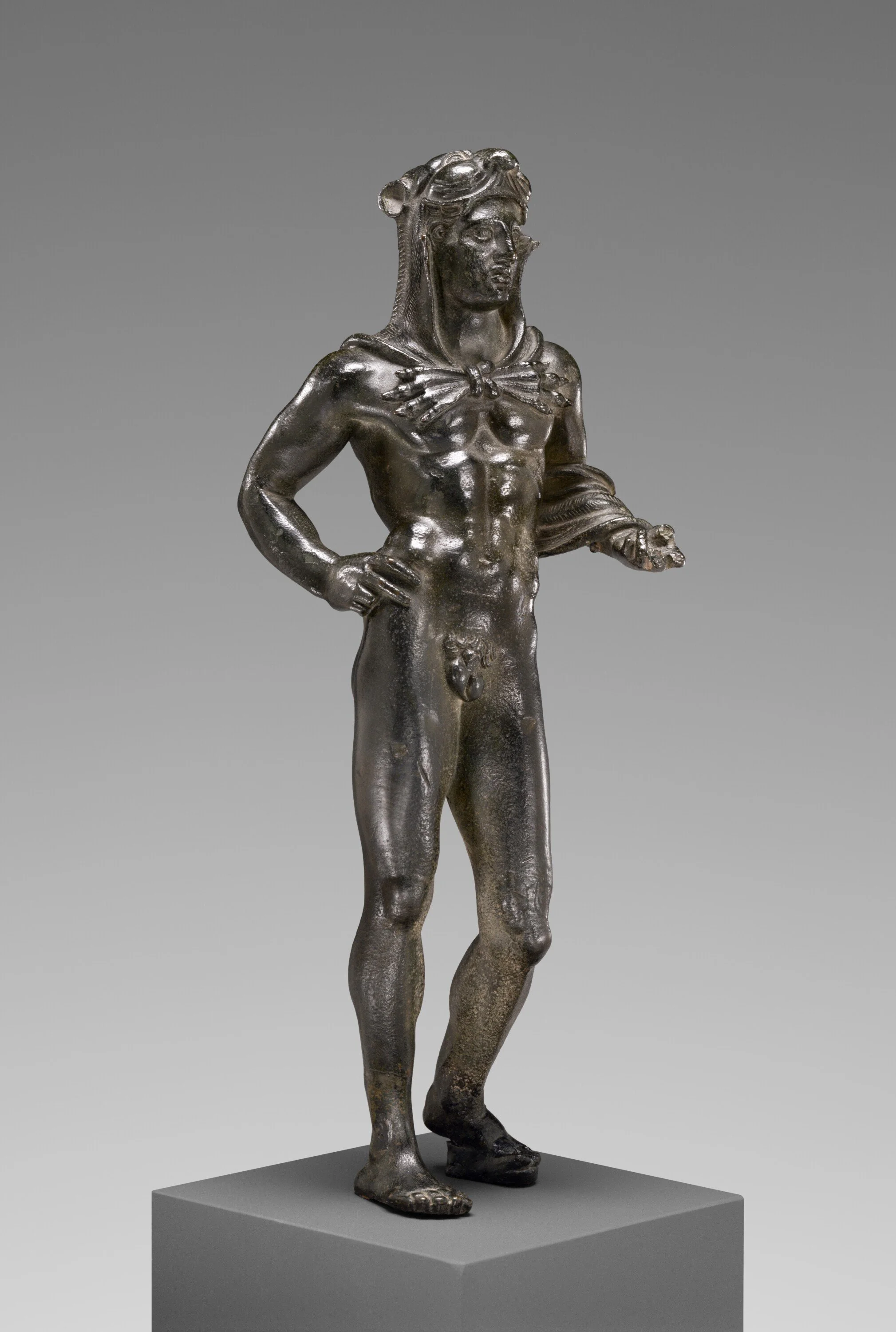
 

Etruscan, Votive statuette of Hercle, 320‒280 B.C. Bronze. 9 9/16 x 2 3/4 x 3 7/16 in. (24.3 x 7 x 8.7 cm). Courtesy of the J. Paul Getty Museum, Los Angeles, 96.AB.36
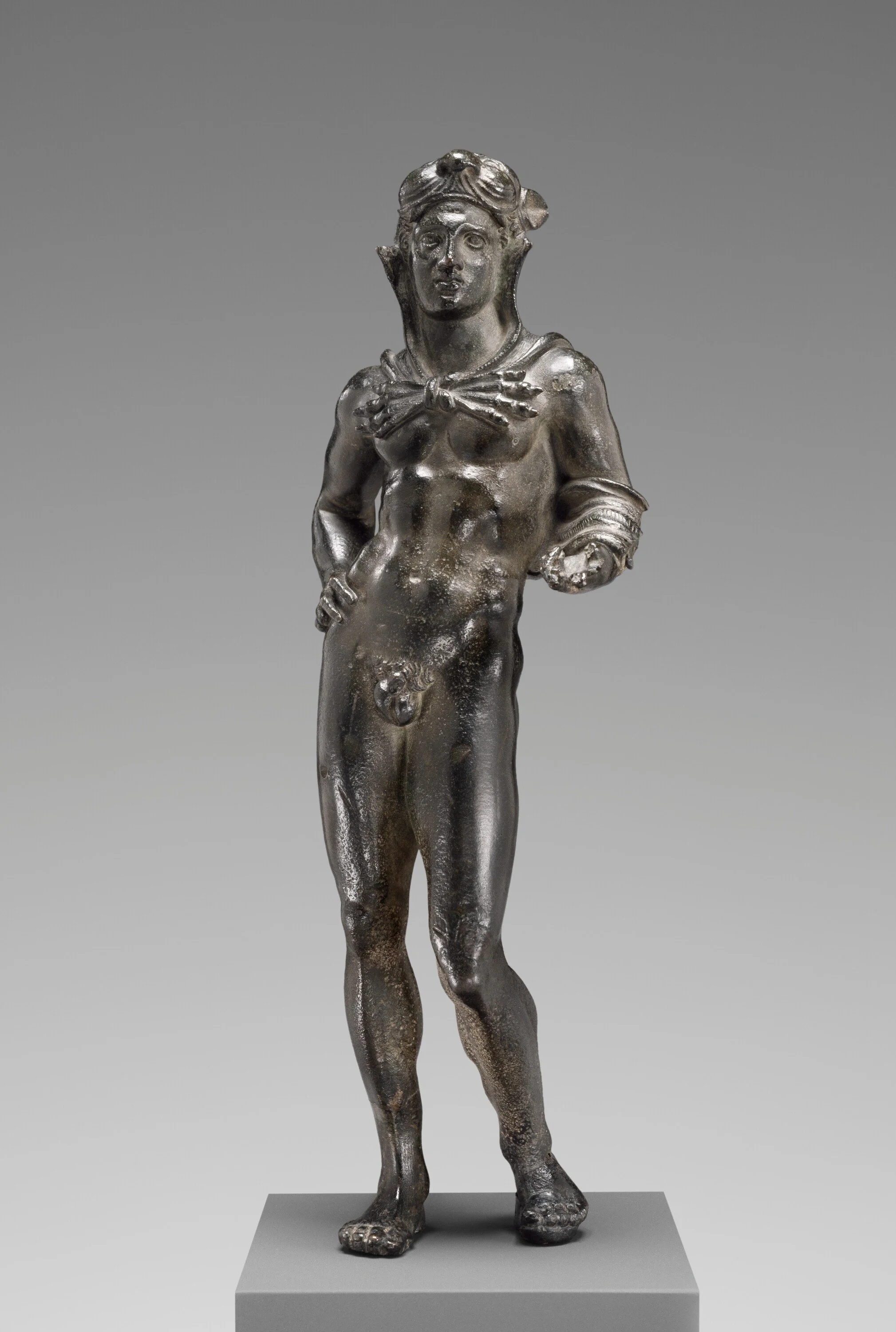
Etruscan, Votive statuette of Hercle, 320‒280 B.C. Bronze. 9 9/16 x 2 3/4 x 3 7/16 in. (24.3 x 7 x 8.7 cm). Courtesy of the J. Paul Getty Museum, Los Angeles, 96.AB.36
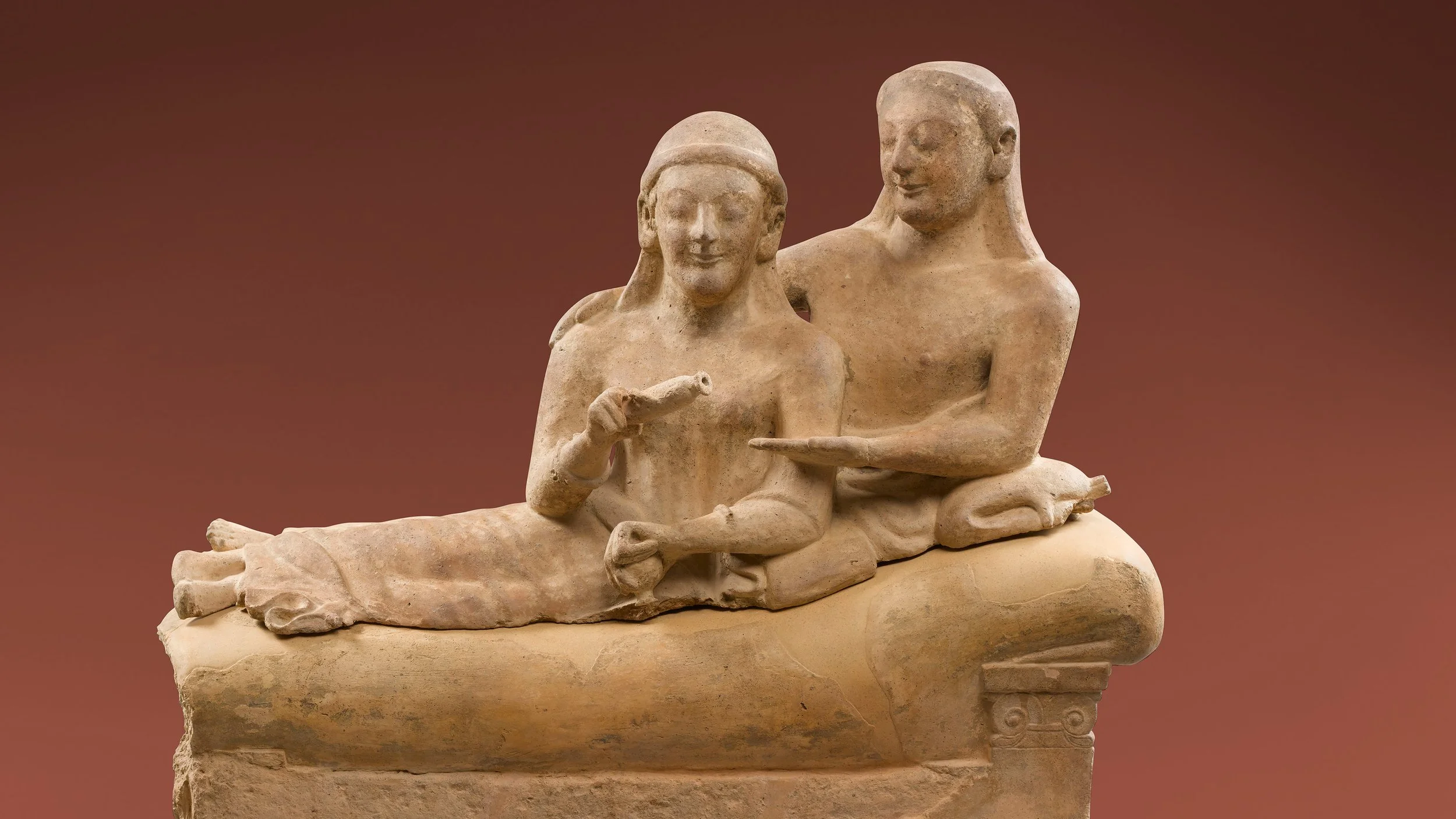
Cinerary urn of the spouses, Etruscan, Caere (modern Cerveteri), 520—500 BC. Terracotta, 22 x 22 7/8 x 9 7/8 in. (56 x 58 x 25 cm). Musée du Louvre, Paris, purchase 1861, collection of the Marquis Giovanni Pietro Campana, Cp 5193.1–2. © Hervé Lewandowski / Dist. RMNGrand Palais / Art Resource, NY
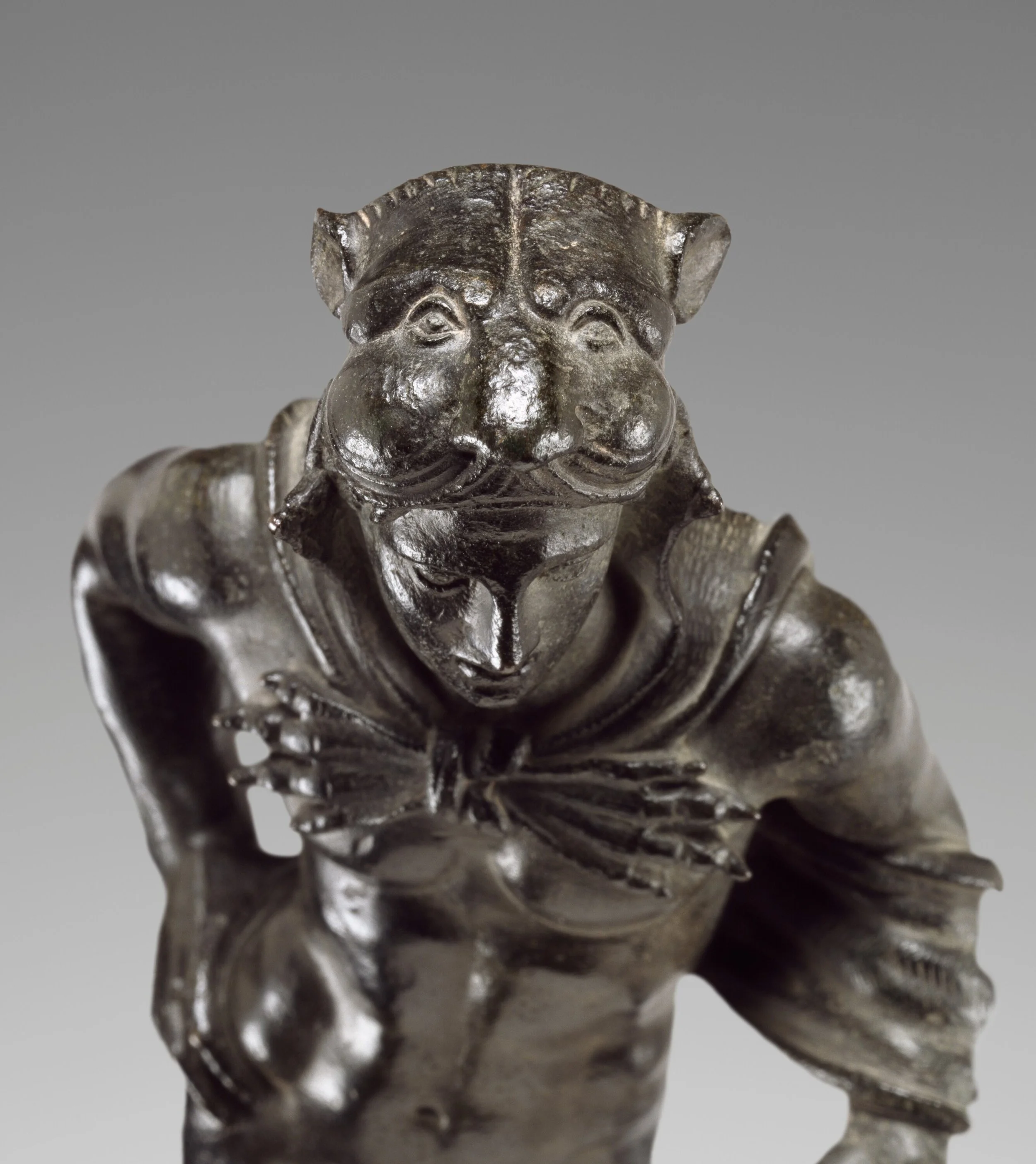
Etruscan, Votive statuette of Hercle, 320‒280 B.C. Bronze. 9 9/16 x 2 3/4 x 3 7/16 in. (24.3 x 7 x 8.7 cm). Courtesy of the J. Paul Getty Museum, Los Angeles, 96.AB.36
Etruscan, Votive statuette of Hercle, 320‒280 B.C. Bronze. 9 9/16 x 2 3/4 x 3 7/16 in. (24.3 x 7 x 8.7 cm). Courtesy of the J. Paul Getty Museum, Los Angeles, 96.AB.36

Sleep and Death cista handle Etruscan, early fourth century BC Bronze, 5 ½ x 6 7/8 in. (14 x 17.4 cm) The Cleveland Museum of Art, Purchase from the J. H. Wade Fund, 1945.13

Appliqué depicting the Sun God Usil, 500‒475 BCE, Vulci Bronze, 8 1/8 in. x 6 1/2 in. x 7 1/16 in. J. Paul Getty Museum, 2017.126

Etruscan, Cinerary urn in the shape of a man standing, 500‒400 B.C. Painted stone. Height: 54 1/4 in. (137.75 cm). The British Museum, London. Photograph © The Trustees of the British Museum.

Amphora, 625-550 BC Terracotta, bucchero ware, 16 7/8 x 12 3/8 x 12 3/8 in. (42.9 x 31.4 x 31.43 cm) Fine Arts Museums of San Francisco, Museum purchase, gift of Renee Dreyfus and Louise Chu through the Ancient Art Council in honor of George and Judy Marcus, 2022.54

Etruscan, Balsamarium (perfume jar) in the shape of a female head, Hellenistic period, late third‒early second century B.C. Bronze. Overall: 4 1/8 x 3 x 2 1/2 in. (10.478 x 7.62 x 6.35 cm). Museum of Fine Arts, Boston, Henry Lillie Pierce Fund, 98.682. Photograph © 2025 Museum of Fine Arts, Boston.

Etruscan, Votive figure of Vanth, 425‒400 B.C. Bronze. Height: 11 in. (27.94 cm). The British Museum, London. Photograph © The Trustees of the British Museum.

Etruscan, Statuette of a Man inscribed with a Dedication to the Etruscan God Lur, 300‒280 B.C. Bronze. Excluding casting tangs: 12 7/16 x 5 1/8 x 5 1/8 in. (31.6 x 13 x 13 cm). The J. Paul Getty Museum, Los Angeles, 96.AB.37

Etruscan, Mirror depicting Hercle abducting Mlacuch (or Minerva restraining), 500‒475 B.C. Silver and bronze. Diameter: 7 in. (17.8 cm); Weight: 1.87 lb. (848 g). The British Museum, London. Photograph © The Trustees of the British Museum.

Statuette of a reclining banqueter, 6th century BC Cast and incised bronze (on modern marble base), 2 x 4 1/2 x 2 1/2 in. (5.1 x 11.4 x 6.4 cm) Fine Arts Museums of San Francisco, Gift of Arthur Sachs, 1952.26

Etruscan, Bronze handle from a large volute-krater (vase for mixing wine and water), late Archaic period, ca. 500‒475 B.C. Bronze. Height: 9 in. (22.86 cm). The Metropolitan Museum of Art, New York, Fletcher Fund, 1961. Photograph courtesy of the Metropolitan Museum of Art.

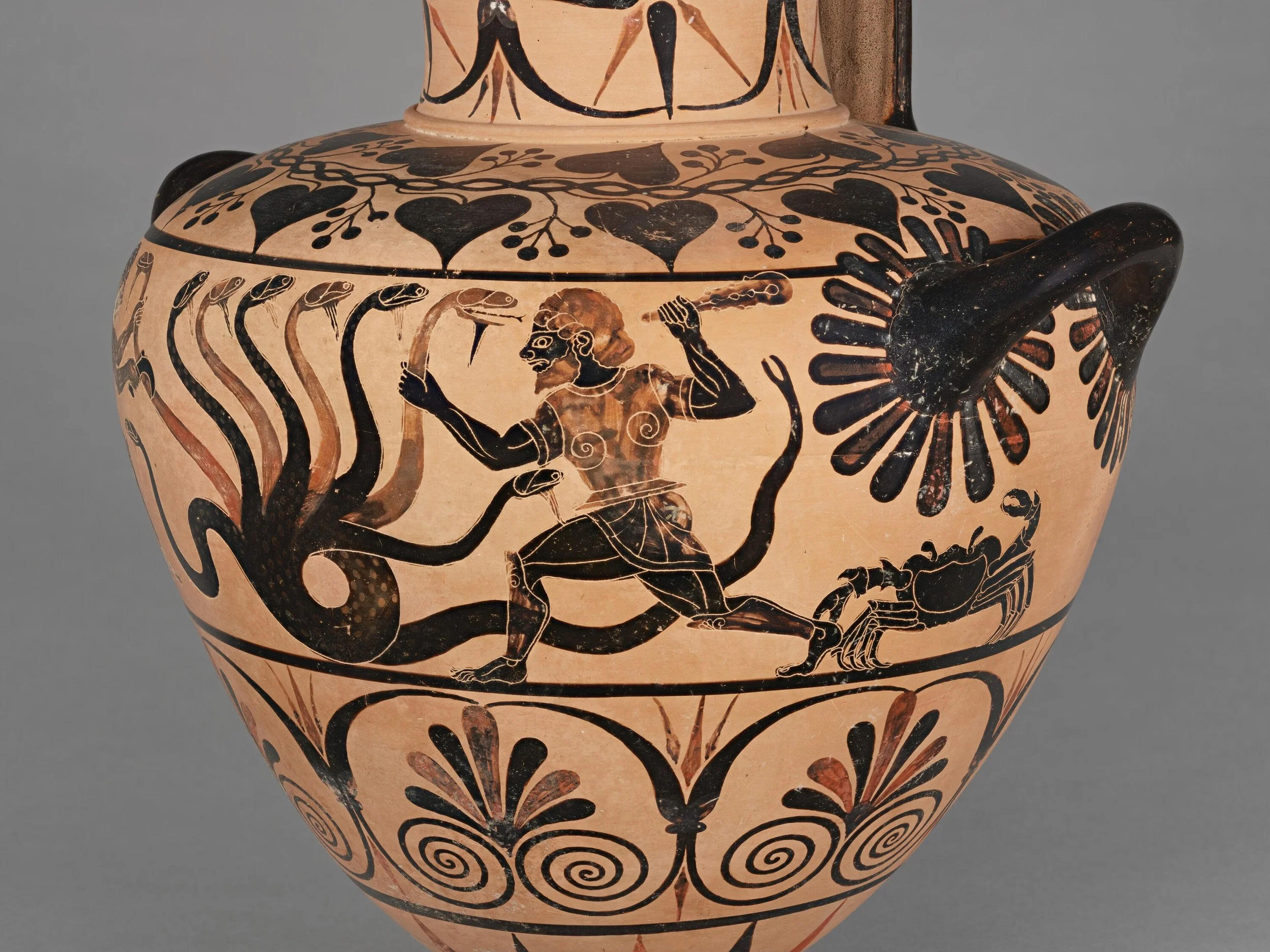
Attributed to Eagle Painter (Greek (Caeretan), active 530 - 500 B.C.), Caeretan Hydria, 520‒510 B.C. Terracotta. 44.6 × 38 × 33.4 cm (17 9/16 × 14 15/16 × 13 1/8 in.). The J. Paul Getty Museum, Los Angeles, 83.AE.346
Etruscan, Canopic urn, 625‒600 B.C. Terracotta. 23 1/16 x 15 1/16 x 12 5/16 in. (58.5 x 38.3 x 31.2 cm). The British Museum, London. Photograph © The Trustees of the British Museum.

Etruscan, Terracotta vase in the shape of a cockerel, Archaic period, ca. 650‒600 B.C. Terracotta, bucchero. Height: 4 1/16 in. (10.319 cm). The Metropolitan Museum of Art, New York, Fletcher Fund, 1924. Photograph courtesy of the Metropolitan Museum of Art.

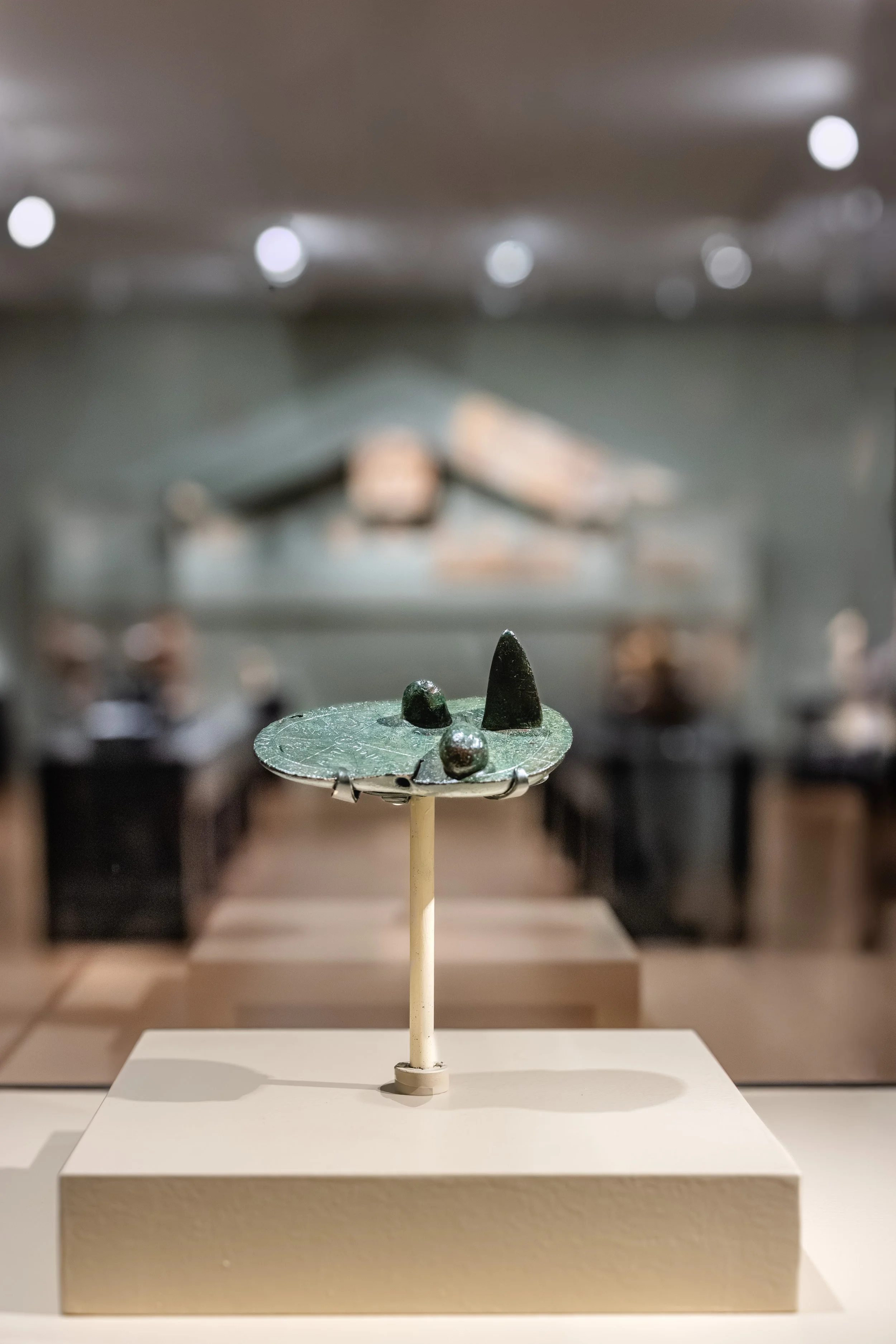
Etruscan, model of a sheep’s liver, found in Piacenza, 2nd century BC. Bronze, 4 15/16 x 3 x 2 3/8 in. (12.6 x 7.6 x 6 cm). Courtesy of the Musei Civici di Palazzo Farnese, Piacenza

Etruscan, Black-figure Nikosthenic amphora, ca. 530‒510 B.C. Terracotta. Diameter: 6 5/8 in. (16.828 cm); Height: 12 1/4 in. (31.115 cm); Rim diameter: 5 1/4 in. (13.335 cm); Foot diameter: 4 3/16 in. (10.636 cm). Cleveland Museum of Art, Purchase from the J. H. Wade Fund, 1974.10. Photograph courtesy of the Cleveland Museum of Art.

Attributed to Eagle Painter (Greek (Caeretan), active 530 - 500 B.C.), Caeretan Hydria, 520‒510 B.C. Terracotta. 44.6 × 38 × 33.4 cm (17 9/16 × 14 15/16 × 13 1/8 in.). The J. Paul Getty Museum, Los Angeles, 83.AE.346
Attributed to Eagle Painter (Greek (Caeretan), active 530 - 500 B.C.), Caeretan Hydria, 520‒510 B.C. Terracotta. 44.6 × 38 × 33.4 cm (17 9/16 × 14 15/16 × 13 1/8 in.). The J. Paul Getty Museum, Los Angeles, 83.AE.346
Etruscan, Tomb of the Leopards, ca. 480-450 B.C. Necropolis of Monterozzi. Photograph by Gleb Simonov, courtesy of Wikimedia Commons.

Attributed to Eagle Painter (Greek (Caeretan), active 530 - 500 B.C.), Caeretan Hydria, 520‒510 B.C. Terracotta. 44.6 × 38 × 33.4 cm (17 9/16 × 14 15/16 × 13 1/8 in.). The J. Paul Getty Museum, Los Angeles, 83.AE.346
Etruscan, Finger Ring with the Ambush of Achilles, 550‒500 B.C. Gold-plated silver and gold. Bezel: 2.1 × 1 cm (13/16 × 3/8 in.); Hoop, Greatest Extent: 2.5 cm (15/16 in.). The J. Paul Getty Museum, Los Angeles, 85.AM.271

Praenestine cista with cover, Etruscan, Hellenistic period, 4th‒1st century BC. Bronze, 14 1/8 in. (35.8 cm). The Morgan Library & Museum, New York. Purchased by J. Pierpont Morgan, 1907. Courtesy of The Morgan Library & Museum, New York

Funerary vase in the shape of a female head, 225—175 BC Bronze, 6 5/16 x 3 9/16 x 5 1/8 in. (16 x 9 x 13 cm) Musée du Louvre, MNC 706 ; Br 2949

Attributed to Eagle Painter (Greek (Caeretan), active 530 - 500 B.C.), Caeretan Hydria, 520‒510 B.C. Terracotta. 44.6 × 38 × 33.4 cm (17 9/16 × 14 15/16 × 13 1/8 in.). The J. Paul Getty Museum, Los Angeles, 83.AE.346
Votive figure perhaps depicting Tinia and Uni, Etruscan, Vulci (probably), 500–475 BC. Bronze, 4 3/8 × 2 9/16 × 1 3/4 in. (11.1 × 6.5 × 4.5 cm). British Museum, London, bequeathed by Richard Payne Knight, 1824,0453.11. © The Trustees of the British Museum, London

Etruscan, Liber linteus zagrabiensis (Linen Book of Zagreb), 3th century BC or later. Linen and ink, 1 3/8 x 157 7/8 x 33 7/8 in. (3.5 x 401 x 86 cm). Inscription in Etruscan of a ritual calendar. © Archaeological Museum in Zagreb