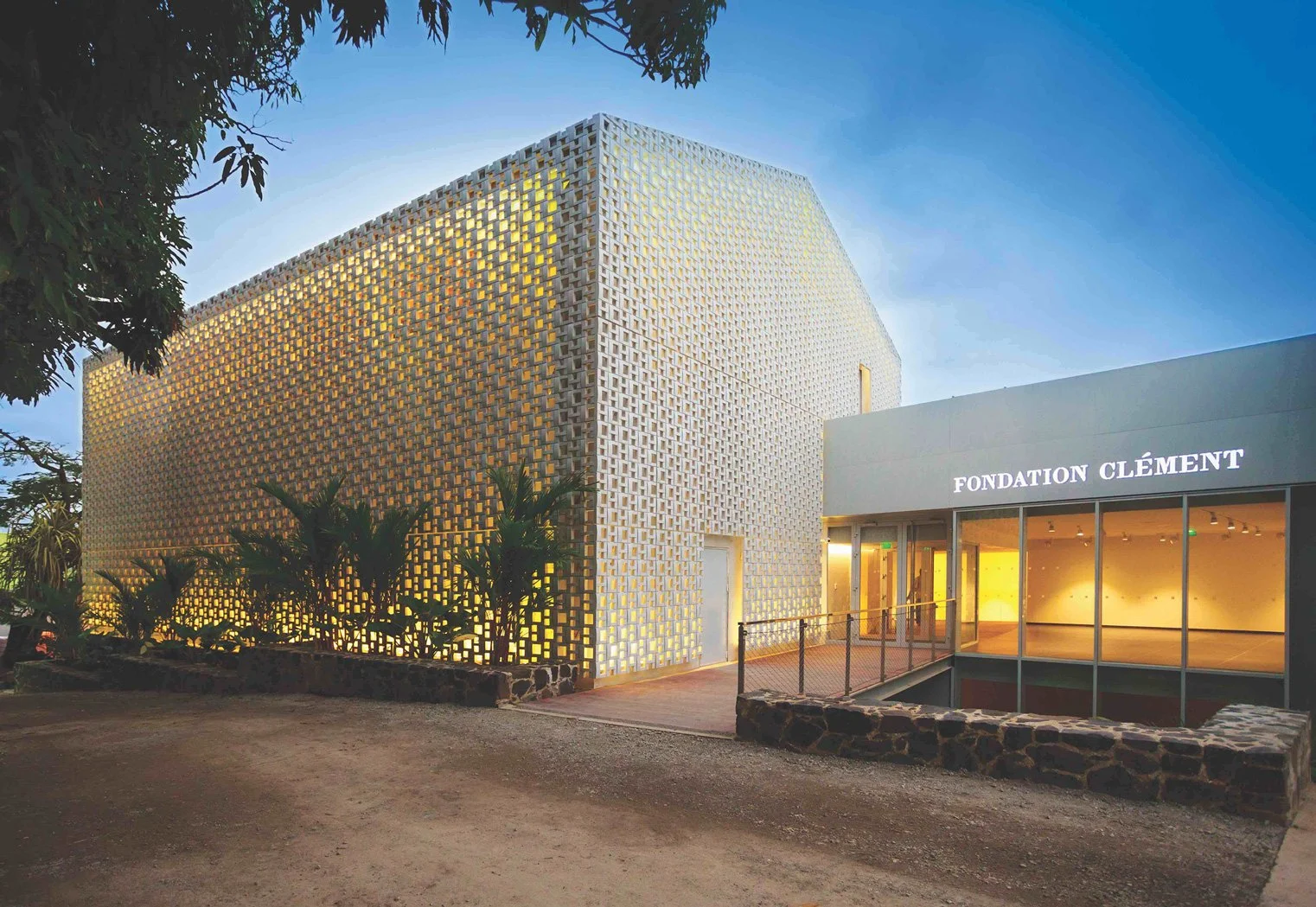
At the Origins of the Caribbean: Taínos & Kalinagos at Fondation Clément
At the Origins of the Caribbean
Taínos & Kalinagos
December 14, 2025 — March 15, 2026
The exhibition "At the Origins of the Caribbean: Taíno & Kalinago" is the result of a partnership between the Fondation Clément and the Musée du quai Branly — Jacques Chirac. It presents more than 330 works from thirty cultural institutions in the Caribbean, Europe, and the United States.
This is the first exhibition of this scale dedicated to the earliest settlements and the two main Amerindian societies that inhabited the Caribbean archipelago at the time of European arrival in the late 15th century. It retraces over 6,000 years of history through a rich and well-documented journey, highlighting the cultures, skills, and beliefs of these founding civilizations.
For the first time in the Caribbean region, major works from prestigious collections will be brought together, originating from Martinique, Guadeloupe, Puerto Rico, and the Dominican Republic, alongside key pieces from German, British, American, Vatican, and French museums, most notably the masterpieces and historical artifacts of the Musée du quai Branly — Jacques Chirac. The exhibition will be interspersed with contemporary works, offering a vibrant dialogue between ancestral heritage and current artistic creation.
The exhibition At the origins of the Caribbean: Tainos & Kalinagos offers a unique and innovative immersion in the life and art of the Native American societies which inhabited the Caribbean archipelago at the time of the arrival of Europeans at the end of the 15th century, but also on their past as well as their future until our days. A few exhibitions have taken place in the past in the Caribbean addressing these different periods, but each time these were presentations at the level of a country or an island, with only local collections. Some unique works belonging to the Pantheon of Native American art will thus be presented as the ceremonial seat or duho taïno from the Musée du Quai Branly, the funerary urn from the Musée Barrois, ceramics from the culture of Saladero, two thousand years old from Martinique and Guadeloupe, several masterpieces from the Museo del Hombre dominicano, the Centro León and the Garcia Arevalo Foundation of the Dominican Republic, unique adornments of Hueca Culture from Puerto Rico. Many of these works are unpublished, such as those from the collection of the Berlin Museum (former collection of Guadeloupean Louis Guesde), or those from recent archaeological excavations in Martinique and Guadeloupe.
The Tainos and Kalinagos (formerly called the Island Caribbean), as they are called today, are the indigenous communities of the West Indies who first encountered Christopher Columbus and the conquistadors. As a result, they have also become the best known to the general public, but their history is much more complex than what school books such as popular works or tourist guides still too often say in a caricatured manner.
The Tainos, in the Greater Antilles, the Bahamas, and the north of the Lesser Antilles, and the Kalinagos, in the south of the latter, are therefore two indigenous societies which populated the Caribbean upon the arrival of Christopher Columbus in 1492. Beyond the events of this first "Meeting of the Two Worlds" and the conquest that followed, the exhibition intends to show how the Caribbean Sea and its string of islands, from Trinidad to Cuba, have a long history of several millennia anchored to the South American continent. As everywhere in the Americas, during this long time, migrations, developments and exchanges took place leading, over the centuries, to the advent of numerous cultures including the Tainos and Kalinagos of the end of the 15th century are not only the last. These Caribbean Native Americans, great sailors and skillful sinners, remarkable gardeners, cultivating many of the plants now consumed throughout the world, have developed complex and diverse societies, integrated into a broad network of alliances stretching from the South American continent to the Greater Antilles.
The first witnesses of this meeting of the two worlds, these Native American peoples of the Caribbean archipelago were also the first to undergo European conquest. Largely wiped out by colonization, wars and disease, they continue to be present today in a few islands such as the Kalinagos of Dominica and the Garifunas in Saint Vincent, or Taino descendants in Puerto Rico. These early West Indians left a large mark and numerous legacies in contemporary Creole societies.