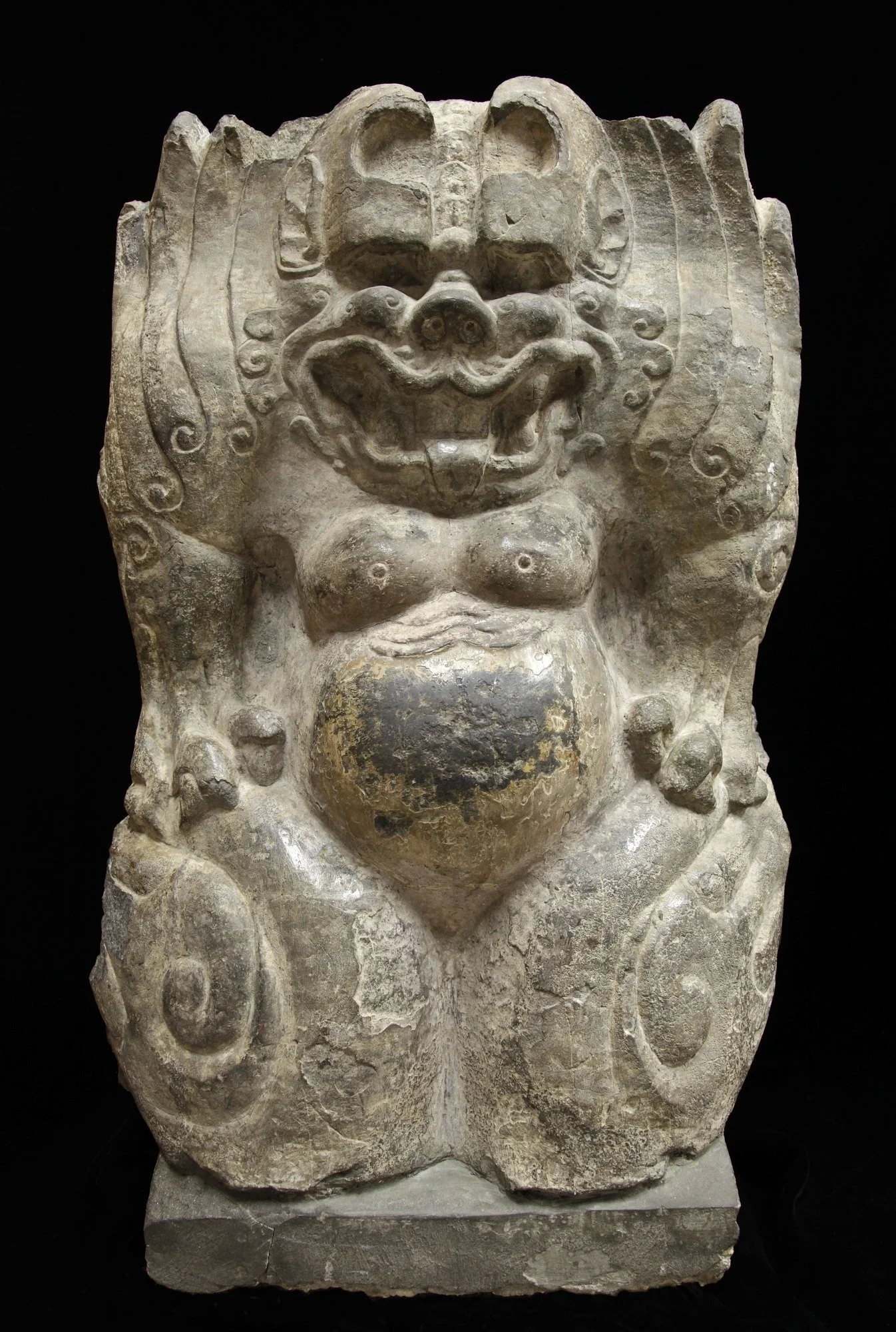
Promise of Paradise: Ancient Chinese Buddhist Sculpture at the Smithsonian’s National Museum of Asian Art


Buddha draped in robes portraying the Realms of Desire
550-577
Anyang, Henan province, China
Limestone
F1923.15
Purchase — Charles Lang Freer Endowment


Promise of Paradise

Ancient Chinese Buddhist Sculpture

Ongoing


Siddhartha Gautama, a prince born some twenty-five hundred years ago, is recognized as the Historical Buddha, or “Awakened One.” His enlightenment freed him from the cycle of rebirth, and his teachings became Buddhism’s foundation.

The religion spread at a phenomenal pace. By 100 CE, missionaries had taken the Buddha’s teachings from his birthplace in South Asia to China. Within a few hundred years, Chinese Buddhist thinkers and translators were expanding the canon, also making it available to believers in Korea and Japan.

Buddhism’s rapid evolution transformed China’s artistic landscape. To modern eyes, Chinese Buddhist sculpture from the sixth through the eighth century is among the most appealing in the history of art. As explored in this gallery, the period produced massive cave sites, grand temples, and monumental stone figures, as well as smaller images for domestic altars.

The buddhas, bodhisattvas, and disciples in this exhibition were made to inspire and guide believers on their spiritual path. Their beauty imparted the promise of paradise.

 
Learn more


Exhibition Preview


Gathering of Buddhas and bodhisattvas
550-577
Southern Xiangtangshan, Cave 2, Hebei province, China
Limestone with traces of pigment
F1921.1
Purchase — Charles Lang Freer Endowment

Stele with Bodhisattva Maitreya (Mile); reverse with Buddha Vairochana (Pilushena)
557-581
Probably Shaanxi province, China
Marble with traces of pigment
F1911.412
Gift of Charles Lang Freer

Standing figure (torso) of a bodhisattva (pusa)
Early 8th century
Probably Xi'an, Shaanxi province, China
Limestone with traces of pigment and gesso
F1916.365
Gift of Charles Lang Freer

Standing Bodhisattva Guanyin (Avalokiteshvara)
700-750
China
Bronze with gilding
F1913.44a-c
Gift of Charles Lang Freer

Bodhisattva Guanyin with a willow wand and amphora
581-618
Probably Shaanxi province, China
Bronze with gilding
F1979.51
Purchase — Charles Lang Freer Endowment

Bodhisattva Avalokiteshvara (Guanyin) with 11 heads
703
Guangzhai Temple, Qibaotai Pagoda, Xi'an, Shaanxi province, China
Limestone
F1909.98
Gift of Charles Lang Freer

Seated Bodhisattva
550-577
Northern Xiangtangshan, North Cave, Hebei province, China
Limestone with traces of gesso and pigment
F1913.57
Gift of Charles Lang Freer

Fragment of Guanyin of Eleven Heads
703
Qibaotai Pagoda, Guangzhai Temple, Xi'an, Shaanxi Province, China
Limestone
F1914.55
Gift of Charles Lang Freer

Buddha draped in robes portraying the Realms of Desire
550-577
Anyang, Henan province, China
Limestone
F1923.15
Purchase — Charles Lang Freer Endowment

Standing Bodhisattva
550-577
Southern Xiangtangshan, Cave 2, Hebei province, China
Limestone with traces of pigment
F1968.45
Gift of Eugene and Agnes E. Meyer

Statuette: Avalokiteshvara (Kuan yin)
520
China
Bronze with gilding
F1909.264
Gift of Charles Lang Freer

Standing Bodhisattva Guanyin (Sanskrit Avalokiteshvara)
581-618
Probably Shaanxi province, China
Bronze with gilding
F1913.42a-e
Gift of Charles Lang Freer

Bodhisattva Avalokiteshvara (Guanyin)
453
Quyang, Hebei province, China
Bronze with gilding
F1909.266
Gift of Charles Lang Freer

Stele with Buddhas of the Past, Present and Future
565; rededicated 1516
Quyang, Hebei province, China
Marble with traces of pigment
F1913.27
Gift of Charles Lang Freer

Figure of Wei Mo Chi from the Longmen Grottoes
ca. 520
Longmen Cave Temples, Cave 140 (Middle Bingyang Cave), east wall, Luoyang, Henan province, China
Limestone
F2001.7
Bequest of Mr. and Mrs. Myron S. Falk, Jr.

Square fragment: showing Buddhist procession
Early 6th century
China
Sandstone
F1913.72
Gift of Charles Lang Freer

Reliquary in the form of a miniature sarcophagus
8th century
Purportedly from Henan province, China
Bronze with gilding
F1915.106a-f
Gift of Charles Lang Freer

Head of the disciple Ananda
550-577
Northern Xiangtangshan, South Cave, Fengfeng, Hebei province, China
Limestone with traces of pigment
F1913.134
Gift of Charles Lang Freer

Kneeling winged monster
550-577
Northern Xiangtangshan, North Cave, Hebei province, China
Limestone
F1953.87
Purchase — Charles Lang Freer Endowment

Seated figure of Buddha
early 8th century
China
Marble with traces of pigment
F1917.243
Gift of Charles Lang Freer

Head of the bodhisattva Mahasthamaprapta (Dashizhi)
550-577
Southern Xiangtangshan, Caves 4-6, Hebei province, China
Limestone with traces of pigment
F1916.346a-b
Gift of Charles Lang Freer

Bodhisattva Avalokiteshvara (Guanyin), Head
493-534
Longmen Grottoes, Luoyang, Henan province, China
Limestone with traces of pigment
F1913.71
Gift of Charles Lang Freer

Standing figure of a bodhisattva
ca. 523
Gongxian Cave Temples, Cave 1, Henan province, China
Sandstone with traces of pigment
F1952.15
Purchase — Charles Lang Freer Endowment

Kneeling winged monster
550-577
Northern Xiangtangshan, North Cave, Hebei province, China
Limestone relief
F1977.9
Transfer from the National Museum of Natural History, Smithsonian Institution

Head of a Buddha
550-577
Northern Xiangtangshan, South Cave, Hebei Province, China
Limestone with traces of pigment and gilding
F1913.67
Gift of Charles Lang Freer

Kneeling winged monster
550-577
Northern Xiangtangshan, North Cave, Hebei province, China
Limestone
F1977.8
Transfer from the National Museum of Natural History, Smithsonian Institution

Kneeling winged monster
550-577
Northern Xiangtangshan, North Cave, Hebei province, China
Limestone relief
F1953.86
Purchase — Charles Lang Freer Endowment

The Bodhisattva Mile (Sanskrit Maitreya), seated in "Pensive Pose"
ca. 575
China
Marble with traces of pigment and gesso
F1911.411
Gift of Charles Lang Freer

Western Paradise of the Buddha Amitabha
550-577
Southern Xiangtangshan, Cave 2, Hebei province, China
Limestone with traces of pigment
F1921.2
Purchase — Charles Lang Freer Endowment