
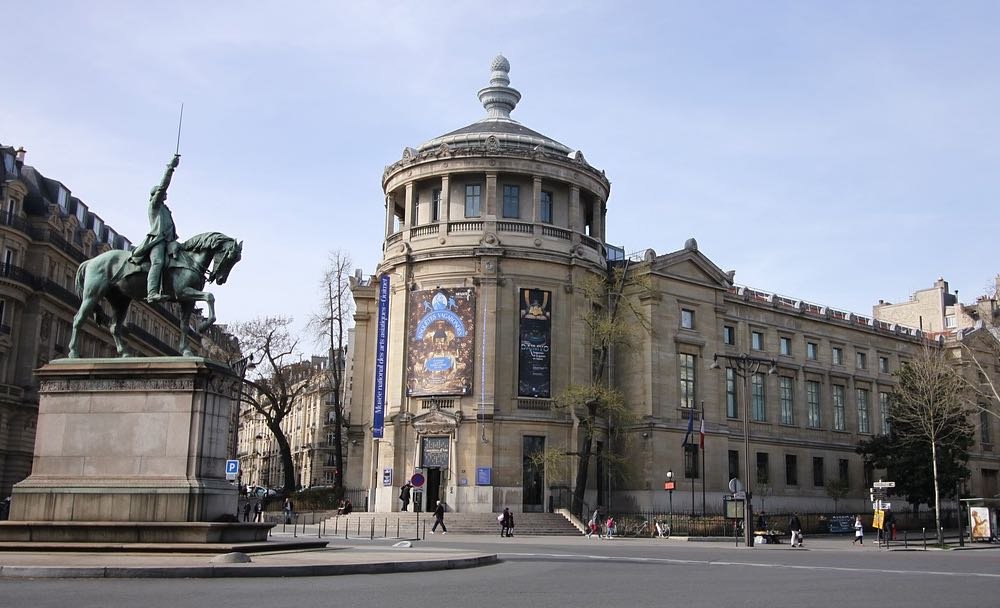
Silla: Gold and the Sacred. Royal Treasures of Korea (57 BCE – 935 CE) at Musée National des Arts Asiatiques — Guimet


Ornement en forme d'aile pour couronne.
Corée du Sud, Gyeongju, tombe de la couronne d’or, 5e siècle, or, H. 40,8 cm, Gyeongju, musée national, Bongwan 9435
© Musée national de Gyeongju


Silla
Gold and the Sacred

Royal Treasures of Korea (57 BCE – 935 CE)

May 20, 2026 — August 31, 2026


Thanks to an exceptional collaboration with the Gyeongju National Museum and other South Korean and French museums, the Guimet Museum is presenting, for the first time in Europe, an exhibition on the Kingdom of Silla (57 BCE - 935 CE), one of the most brilliant civilizations in East Asia.

Revealed by archaeology as well as medieval chronicles, Silla art appears today as a living heritage at the heart of South Korea’s cultural memory. This unique presentation highlights a kingdom where, for nearly a millennium, art, spirituality and power combined to shape a culture of remarkable richness.

From the mythical origins of Silla, recounted in medieval Korean chronicles, to the fall of the kingdom, the exhibition unfolds in five thematic sections that trace the history, artistic expressions and memory of a state that was both powerful and deeply rooted in spiritual traditions. It offers a fresh perspective on this civilisation, revealing how political, religious and aesthetic dynamics intertwined to produce a legacy that has survived to this day.

Visitors will be transported back to the origins of the historic city of Gyeongju, in southeastern Korea, where they will discover the traces of a civilization whose legacy is still evident in the mountains, the immense “mountain tombs,” the temples, and modern life. It is a city whose residents are deeply committed to preserving their heritage.

From the 4th to the early 6th century, the period known as Maripgan marked a decisive stage in the affirmation of Silla’s identity with the rise of the Kim clan. Gold became the kingdom’s striking signature, a symbol of consolidated power. The treasures unearthed from the great royal tombs (gold crowns, jade ornaments, intricate jewellery, figurative sandstone) bear witness to exceptional craftsmanship and a kingdom open to trade along the routes connecting Japan, China, the steppes, Central Asia and even the Mediterranean world. Political prestige and artistic splendour merged, giving rise to a visual language of exceptional inventiveness.

During the Unified Silla period (676–935), the kingdom established itself as the dominant southern power, with Buddhism as the spiritual force and protector of the territory. Precious materials once reserved for royal tombs now found their way into monasteries, pagodas, reliquaries and sacred images. The treasures of iron, gold, silver, glass and stone from Silla constitute a living heritage, still visible in the landscape of Gyeongju and in the collective memory.

Nestled between wooded mountains and rolling plains, the city of Gyeongju, capital of Silla, still offers one of the most unique landscapes in South Korea. Pagodas, royal tombs and monumental ruins interact with the lines of a contemporary city that is careful to preserve its heritage. Visitors literally walk in the heart of history, in a space where the past remains visible, inhabited and transmitted.


Exhibition Preview


Figurine féminine.
Corée du Sud, Gyeongju, Hwangseong-dong, 7e siècle, argile, H. 16,5 cm, Gyeongju, musée national, Gyeongju 7149
© Musée national de Gyeongju

Boucles d’oreille.
Corée du Sud, Gyeongju, Bomun-ri, Tombe de Bubuchong, 5e siècle, or, 8,7 × 3,8 cm, Séoul, musée national de Corée, Bongwan 6255
© Musée national de Gyeongju

Bouddha.
Corée du Sud, monastère Hwangboksa, pagode de Guhwang-dong, période du Silla unifié (en 692), bronze doré, H. 14,4 cm, Séoul, musée national de Corée, Bongwan 14753
© Musée national de Gyeongju

Couronne.
Corée du Sud, Gyeongju, tombe de la couronne d’or, 5e siècle, or, jade, 27,7 × 19 cm (couronne), Gyeongju, musée national, Bongwan 9435
© Musée national de Gyeongju

Vase à col haut et décor de figurines.
Corée, Gyeongju, Hwangnam-dong, tombe du roi Michu, 5e siècle, grès et argile, H. 34 cm, Gyeongju, musée national, Dépôt 140
© Musée national de Gyeongju

Collier en or et jade.
Corée du Sud, Gyeongju, Noseo-ri, tombe 215, période des Trois Royaumes (57 av. J.-C. - 668 apr. J.-C.), or, jade, L. 30,3 cm, Séoul, musée national de Corée, Bongwan 13613
© Musée national de Gyeongju

Bodhisattva Maitreya en posture méditative
Corée du Sud, Mulgum-eup, Yangsan-si, 5e-7e siècle, bronze doré, H : 26 cm, Séoul, musée national de Corée, Shinsu 4165
© Musée national de Gyeongju

Bas-relief représentant un des quatre rois-gardiens célestes.
Corée du Sud, Gyeongju, monastère des Quatre rois-gardiens célestes, règne du Roi Munmu vers 679, argile, glaçure verte, H. 52 cm, Gyeongju, musée national, Gyeongju 199
© Musée national de Gyeongju

Armure.
Corée du Sud, Gyeongju, Sara-ri, tombe no 65, 5e siècle, fer, H. 60,5 cm, Gyeongju, musée national, Sara 1288
© Musée national de Gyeongju

Ornement en forme d'aile pour couronne.
Corée du Sud, Gyeongju, tombe de la couronne d’or, 5e siècle, or, H. 40,8 cm, Gyeongju, musée national, Bongwan 9435
© Musée national de Gyeongju

Reliquaire.
Corée du Sud, Gyeongju, Nawon-ri, pagode en pierre à cinq étages, 8e-10e siècle, bronze doré, 15,2 × 15,6 cm, Epaisseur : 0,2 cm, Séoul, musée national de Corée, Shinsu 14901
© Musée national de Gyeongju

Ceinture en or.
Corée du Sud, Gyeongju, tombe de la couronne d’or, 5e siècle, or, jade, verre, L. 131,4 cm, Gyeongju, musée national, Bongwan 9415, 9416
© Musée national de Gyeongju

Dague avec poignée et fourreau dorés.
Corée du Sud, Gyeongju, Gyerim-ro, tombe no 14, 6e siècle, or, grenats rouges, verre bleu, pierres précieuses, L. 36 cm x l. 9,05 cm, Gyeongju, musée national, Gyeongju 42429
© Musée national de Gyeongju

Collier-pectoral.
Corée du Sud, Gyeongju, Wolseong-ro, tombe 13, 4e-5e siècle, verre, or, jade, L. 43,5 cm, Gyeongju, musée national, Gyeongju 5854
© Musée national de Gyeongju

Coiffe.
Corée du Sud, Gyeongju, tombe de la couronne d’or, 5e siècle, or, H. 17,6 cm, Gyeongju, musée national, Bongwan 9435
© Musée national de Gyeongju

Boîte à sûtra.
Corée du Sud, Gyeongju, Namsan (?), 8e-10e siècle, bronze doré, L. 8,8 cm, Gyeongju, musée national, Bongwan 6859
© Musée national de Gyeongju

Ensemble de récipients en forme d’oiseau.
Corée du Sud, Gyeongju, Deokcheon-ri, 3e-4e siècle, terre cuite, Gyeongju, musée national, Gyeongju
© Musée national de Gyeongju

Pointes de lance.
Corée du Sud, Gyeongju, Guero-ri, tombe 1, 3e siècle, fer, L. 96,2 cm, Gyeongju, musée national, Gyeongju 42202 (5-2)
© Musée national de Gyeongju

Ornement arrière de selle.
Corée du Sud, Gyeongju, tombe du Cheval céleste, 5e-6e siècle, bronze doré, bois, laque noir, cuir, soie, 33,9 × 53,3 cm, Gyeongju, musée national, Gyeongju 2304
© Musée national de Gyeongju